Thursday, October 28, 2021

Jupiter

JUPITER
 Jupiter has a long history of astonishing researchers – right back to 1610 when Galileo Galilei tracked down the primary moons past Earth. That disclosure changed the manner in which we see the universe. 


Fifth in line from the Sun, Jupiter is, by a long shot, the biggest planet in the planetary group – over two times as huge as the wide range of various planets consolidated. 


Jupiter's natural stripes and whirls are really chilly, blustery billows of smelling salts and water, gliding in an air of hydrogen and helium. Jupiter's notorious Great Red Spot is a monster storm greater than Earth that has seethed for many years. 


One space apparatus – NASA's Juno orbiter – is right now investigating this monster world. 


Go farther: Explore Jupiter In Depth › 


This striking perspective on Jupiter was caught by NASA's Juno space apparatus on Feb. 12, 2019, as the space apparatus played out its seventeenth science pass of Jupiter. Credits: NASA/JPL-Caltech/SwRI/MSSS| › Full picture, credits, and subtitle 


10 Need-to-Know Things About Jupiter 


THE GRANDEST PLANET 


Eleven Earths could fit across Jupiter's equator. In case Earth were the size of a grape, Jupiter would be the size of a ball. 


FIFTH PLANET FROM OUR STAR 


Jupiter circles around 484 million miles (778 million kilometers) or 5.2 Astronomical Units (AU) from our Sun (Earth is one AU from the Sun). 


Brief DAY/LONG YEAR 


Jupiter turns once about at regular intervals (a Jovian day), yet takes around 12 Earth a very long time to finish one circle of the Sun (a Jovian year). 


JUPITER AND IO 


WHAT'S INSIDE 


Jupiter is a gas goliath thus comes up short on an Earth-like surface. If it has a strong inward center by any means, it's logical just with regards to the size of Earth. 


Monstrous WORLD, LIGHT ELEMENTS 


Jupiter's environment is made up generally of hydrogen (H2) and helium (He). 


Universes GALORE 


Jupiter has in excess of 75 moons. 


RINGED WORLD 


In 1979 the Voyager mission found Jupiter's weak ring framework. Every one of the four monster planets in our planetary group have ring frameworks. 


Investigating JUPITER 


Nine rocket have visited Jupiter. Seven flew by and two have circled the gas monster. Juno, the latest, shown up at Jupiter in 2016. 


Elements FOR LIFE? 


Jupiter can't uphold life as far as we might be concerned. In any case, a portion of Jupiter's moons have seas underneath their outside layers that may uphold life. 


10 


SUPER STORM 


Jupiter's Great Red Spot is a tremendous tempest that is about double the size of Earth and has seethed for longer than a century. 


Extraordinary RED SPOT 


Mainstream society 


The greatest planet in our planetary group, Jupiter likewise has an enormous presence in mainstream society, including numerous films, TV shows, computer games, and funnies. Jupiter was a striking objective in the Wachowski kin's sci-fi exhibition "Jupiter Ascending," while different Jovian moons give settings to "Cloud Atlas," "Futurama," "Force Rangers," and "Corona," among numerous others. In the film "Men dressed in Black" when Agent J – played by Will Smith – specifies he thought one about his youth instructors was from Venus, Agent K – played by Tommy Lee Jones – answers that she is really from one of Jupiter's moons. 


Representation of Jupiter 


Child Friendly Jupiter 


Jupiter is the greatest planet in our planetary group. It's like a star, however it never got adequately large to begin consuming. 


Jupiter is shrouded in whirling cloud stripes. It has large tempests like the Great Red Spot, which has been going for many years. 


Jupiter is a gas monster and doesn't have a strong surface, however it might have a strong internal center with regards to the size of Earth. Jupiter additionally has rings, however they're too weak to even think about seeing well overall.

Free Fire

FREE FIRE
 Garena Free Fire, otherwise called Free Fire, is a fight royale game, created by 111 Dots Studio[2] and distributed by Garena for Android and iOS.[3][4] It turned into the most downloaded versatile game internationally in 2019.[5] The game got the honor for the "Best Popular Vote Game" by the Google Play Store in 2019.[6] As of May 2020, Free Fire has established a standard with more than 80 million every day dynamic clients globally.[7] As of November 2019, Free Fire has earned more than $1 billion worldwide.[8] 


Free Fire Max, a graphical upgraded rendition of Free Fire was delivered internationally on 28 September 2021.[9] 


Substance 


1 Gameplay 


2 Reception 


3 Esports 


4 References 


5 External connections 


Interactivity 


Garena Free Fire is an online-just activity experience fight royale game played in third individual point of view. 


A fight royale match comprises of up to 50 players dropping onto an island looking for weapons and gear to kill different players. Players are allowed to pick their beginning position and take weapons and supplies to expand their fight life. 


At the point when players join a game, they are in a plane which flies over an island. While the plane is flying over the island, the players can leap out any place they like, along these lines permitting them to pick an essential spot to land away from foes. Subsequent to handling, the players should then go searching for weapons and utility things. Clinical hardware, medium and enormous weapons, explosives, and different things highlighted can be found all through the island. A definitive objective of the players is to get by on the island with a limit of 50 players on the web; this requires killing all adversaries the players experience en route and guaranteeing that they are the main survivor remaining. The accessible safe space of the game's guide diminishes in size over the long haul, coordinating the enduring players into more tight regions to constrain experiences. The last player or group standing successes the round.[10] 


Gathering 


The designs were portrayed as having "an advantage for mid-and low-particular telephones", however a commentator expressed that "assuming games with great illustrations are your thing, we don't suggest that you play Free Fire Battlegrounds. In any case, if you like fight royale games and need to mess around with your companions, you ought to play."[11] 


Tais Carvalho of TechTudo remarked that Free Fire "focuses on execution, settling on it an extraordinary decision for a gadget. The ongoing interaction sticks out and has sufficient substance to engage and offer remunerating battle." Regarding the movement of characters and abilities, she said it is "a garish add-on."[12] 


In the Google Play yearly rundown of "Best Apps of the Year", Free Fire won in the "Best Popular Vote Game" classification of 2019, being the most openly casted a ballot in Brazil and in Thailand.[13][14][15] 


Garena Free Fire is one of the most famous fight royale versatile games, behind PUBG Mobile, Fortnite Battle Royale, and Call of Duty: Mobile. It is especially well known in Latin America, India, and Southeast Asia.[16] Free Fire was the fourth most downloaded game on the Google Play Store in the final quarter of 2018,[17] and was the fourth most downloaded game worldwide in 2018 on iOS and the Google Play Store together.[18] The title procured roughly 182 million downloads in 2018, making it the second most downloaded fight royale versatile game (above Fortnite Battle Royale and behind just PUBG Mobile),[19] and netted around $19.3 million in month to month incomes through December 2018, turning into a critical monetary accomplishment for Garena.[20][21] As of August 2021, Garena Free Fire has more than one billion downloads on the Google Play Store.[22] 


Toward the finish of Q1 2021, Free Fire outperformed PUBG Mobile in incomes in the United States, producing $100 million in turnover when contrasted with PUBG Mobile's $68 million.[23] Free Fire's incomes hopped by 4.5 occasions when contrasted with a similar period for the past year.[24]


Playerunknown's battlegrounds aka Pubg Mobile

PUBG
 PlayerUnknown's Battlegrounds (otherwise called PUBG: Battlegrounds) is an online multiplayer fight royale game created and distributed by PUBG Corporation, an auxiliary of Bluehole. The game depends on past mods that were made by Brendan "PlayerUnknown" Greene for different games, roused by the 2000 Japanese movie Battle Royale, and ventured into an independent game under Greene's inventive heading. In the game, dependent upon 100 players parachute onto an island and rummage for weapons and gear to kill others while trying not to get offed themselves. The accessible safe space of the game's guide diminishes in size over the long haul, guiding enduring players into more tight regions to drive experiences. The last player or group standing successes the round. 


PUBG was first delivered for Microsoft Windows through Steam's initial access beta program in March 2017, with a full delivery in December 2017. The game was likewise delivered by Microsoft Studios for the Xbox One by means of its Xbox Game Preview program that very month, and formally delivered in September 2018. PUBG Mobile, an allowed to-play versatile game rendition for Android and iOS, was delivered in 2018, notwithstanding a port for the PlayStation 4. An adaptation for the Stadia streaming stage was delivered in April 2020. PUBG is one of the most amazing selling, most elevated earning and most-played computer games ever. The first PlayerUnknown's Battlegrounds has sold more than 70 million duplicates on PCs and game control center starting at 2020, while the more effective PUBG Mobile form has collected 1 billion downloads as of March 2021 and earned more than $6.2 billion on cell phones as of August 2021. 


PUBG got positive surveys from pundits, who saw as that while the game had some specialized imperfections, it introduced new sorts of ongoing interaction that could be effortlessly drawn nearer by players of any expertise level and was exceptionally replayable. The game was ascribed to promoting the fight royale classification, with various informal Chinese clones likewise being created following its prosperity. The game likewise got a few Game of the Year assignments, among different awards. PUBG Corporation has run a few little competitions and acquainted in-game devices with assistance with broadcasting the game to observers, as they wish for it to turn into a well known esport. PUBG Mobile has been prohibited in certain nations for supposedly being destructive and habit-forming to more youthful players.

Monday, October 25, 2021

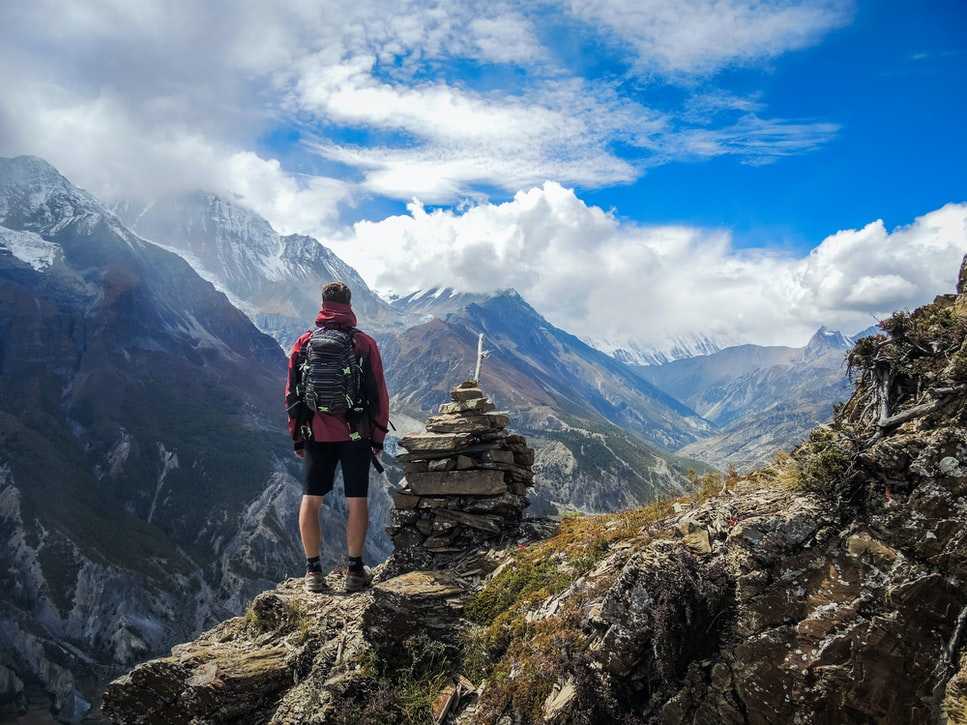
The Himalayas


 Himalayas, Nepali Himalaya, incredible mountain arrangement of Asia framing a boundary between the Plateau of Tibet toward the north and the alluvial fields of the Indian subcontinent toward the south. The Himalayas remember the most noteworthy mountains for the world, with in excess of 110 pinnacles ascending to rises of 24,000 feet (7,300 meters) or more above ocean level. One of those pinnacles is Mount Everest (Tibetan: Chomolungma; Chinese: Qomolangma Feng; Nepali: Sagarmatha), the world's most noteworthy, with a rise of 29,032 feet (8,849 meters; see Researcher's Note: Height of Mount Everest. The mountains' high pinnacles ascend into the zone of ceaseless snow. 


For millennia the Himalayas have held a significant importance for the people groups of South Asia, as their writing, folklores, and religions reflect. Since antiquated occasions the huge glaciated statures have drawn in the consideration of the explorer mountain climbers of India, who begat the Sanskrit name Himalaya—from hima ("snow") and alaya ("habitation")— for that extraordinary mountain framework. In contemporary occasions the Himalayas have offered the best fascination and the best test to mountain climbers all through the world. 


THE HIMALYAS
The reaches, which structure the northern boundary of the Indian subcontinent and a practically closed hindrance among it and the grounds toward the north, are essential for an immense mountain belt that extends most of the way all throughout the planet from North Africa to the Pacific Ocean shore of Southeast Asia. The actual Himalayas stretch uninterruptedly for around 1,550 miles (2,500 km) from west to east between Nanga Parbat (26,660 feet [8,126 metres]), in the Pakistani-controlled piece of the Kashmir district, and Namjagbarwa (Namcha Barwa) Peak (25,445 feet [7,756 metres]), in the Tibet Autonomous Region of China. Between those western and eastern limits lie the two Himalayan nations of Nepal and Bhutan. The Himalayas are lined toward the northwest by the mountain scopes of the Hindu Kush and the Karakoram and toward the north by the high and immense Plateau of Tibet. The width of the Himalayas from south to north fluctuates somewhere in the range of 125 and 250 miles (200 and 400 km). Their absolute region adds up to around 230,000 square miles (595,000 square km). 


Forested inclines of the lower regions of the Himalayan mountains close to Kalimpong, northern West Bengal, India. 


However India, Nepal, and Bhutan have power over a large portion of the Himalayas, Pakistan and China additionally involve portions of them. In the contested Kashmir area, Pakistan has regulatory control of around 32,400 square miles (83,900 square km) of the reach lying north and west of the "line of control" set up among India and Pakistan in 1972. China manages nearly 14,000 square miles (36,000 square km) in the Ladakh area and has a guaranteed area at the eastern finish of the Himalayas inside the Indian province of Arunachal Pradesh. Those debates emphasize the limit issues looked by India and its neighbors in the Himalayan area. 


The most trademark elements of the Himalayas are their taking off statures, steep-sided rugged pinnacles, valley and snow capped ice sheets regularly of breathtaking size, geography profoundly cut by disintegration, apparently inconceivable waterway gorges, complex geologic construction, and series of elevational belts (or zones) that show distinctive environmental relationship of greenery, fauna, and environment. Seen from the south, the Himalayas show up as a tremendous bow with the primary pivot transcending the snow line, where snowfields, elevated ice sheets, and torrential slides all feed lower-valley glacial masses that thus comprise the wellsprings of the greater part of the Himalayan streams. Most of the Himalayas, nonetheless, lies beneath the snow line. The mountain-building process that made the reach is as yet dynamic. As the bedrock is lifted, significant stream disintegration and tremendous avalanches happen. 


The Himalayan reaches can be gathered into four equal longitudinal mountain belts of changing width, each having unmistakable physiographic provisions and its own geologic history. They are assigned, from south to north, as the Outer, or Sub-, Himalayas (likewise called the Siwalik Range); the Lesser, or Lower, Himalayas; the Great Himalaya Range (Great Himalayas); and the Tethys, or Tibetan, Himalayas. Farther north falsehood the Trans-Himalayas in Tibet legitimate. From west to east the Himalayas are isolated comprehensively into three precipitous locales: western, focal, and eastern. 


Geologic history 


In the course of the last 65 million years, incredible worldwide plate-structural powers have moved Earth's outside layer to shape the band of Eurasian mountain ranges—including the Himalayas—that stretch from the Alps to the mountains of Southeast Asia. 


Worked on north–south cross part of the Himalayas, uncovering a foreland bowl (Ganga Basin), an overthrusting of glasslike landscapes onto the Indian Plate, and a more extreme push issue (an incline) underneath the Great Himalayas. 


During the Jurassic Period (around 201 to 145 million years prior), a profound crustal downwarp—the Tethys Ocean—lined the whole southern edge of Eurasia, then, at that point, barring the Arabian Peninsula and the Indian subcontinent. Around 180 million years prior, the old supercontinent of Gondwana (or Gondwanaland) started to separate. One of Gondwana's parts, the lithospheric plate that incorporated the Indian subcontinent, sought after a toward the north crash course toward the Eurasian Plate during the following 130 to 140 million years. The Indian-Australian Plate bit by bit restricted the Tethys channel to a goliath pincer among itself and the Eurasian Plate. As the Tethys channel restricted, expanding compressive powers bowed the layers of rock underneath it and made interweaving deficiencies in its marine dregs. Masses of rocks and basalts barged in from the profundity of the mantle into that debilitated sedimentary outside. Between around 40 and 50 million years prior, the Indian subcontinent at long last slammed into Eurasia. The plate containing India was sheared descending, or subducted, underneath the Tethys channel at a steadily expanding pitch. 


During the following 30 million years, shallow pieces of the Tethys Ocean step by step depleted as its ocean floor was moved up by the plunging Indian-Australian Plate; that activity framed the Plateau of Tibet. On the level's southern edge, negligible mountains—the Trans-Himalayan scopes of today—turned into the area's first significant watershed and rose sufficiently high to turn into a climatic obstruction. As heavier downpours fell on the steepening southern inclines, the major southern waterways dissolved toward the north toward the headwaters with expanding power along old cross over deficiencies and caught the streams streaming onto the level, consequently establishing the framework for the seepage designs for a huge part of Asia. Toward the south the northern compasses of the Arabian Sea and the Bay of Bengal quickly loaded up with flotsam and jetsam conveyed somewhere around the hereditary Indus, Ganges (Ganga), and Brahmaputra streams. The broad disintegration and statement proceed even presently as those streams convey colossal amounts of material consistently. 


At last, nearly 20 million years prior, during the early Miocene Epoch, the beat of the crunching relationship between the two plates expanded strongly, and Himalayan mountain building started vigorously. As the Indian subcontinental plate kept on plunging underneath the previous Tethys channel, the highest layers of old Gondwana transformative rocks stripped back over themselves for a long level distance toward the south, framing nappes. Many influxes of nappes push toward the south over the Indian landmass to the extent 60 miles (around 100 km). Each new nappe comprised of Gondwana rocks more seasoned than the last. In time those nappes became collapsed, getting the previous channel by exactly 250 to 500 level miles (400 to 800 km). Meanwhile, downcutting waterways coordinated with the pace of elevate, conveying tremendous measures of dissolved material from the rising Himalayas to the fields where it was unloaded by the Indus, Ganges, and Brahmaputra streams. The heaviness of that dregs made miseries, which thus could hold greater silt. In certain spots the alluvium underneath the Indo-Gangetic Plain currently surpasses 25,000 feet (7,600 meters) top to bottom. 

Most likely just inside the beyond 600,000 years, during the Pleistocene Epoch (around 2,600,000 to 11,700 years prior), did the Himalayas become the most noteworthy mountains on Earth. On the off chance that solid even pushing described the Miocene and the succeeding Pliocene Epoch (around 23 to 2.6 million years prior), exceptional elevate encapsulated the Pleistocene. Along the center zone of the northernmost nappes—and just past—translucent rocks containing new gneiss and stone interruptions arose to create the amazing peaks seen today. On a couple of pinnacles, like Mount Everest, the glasslike rocks conveyed old fossil-bearing Tethys residue from the north piggyback to the highest points. 

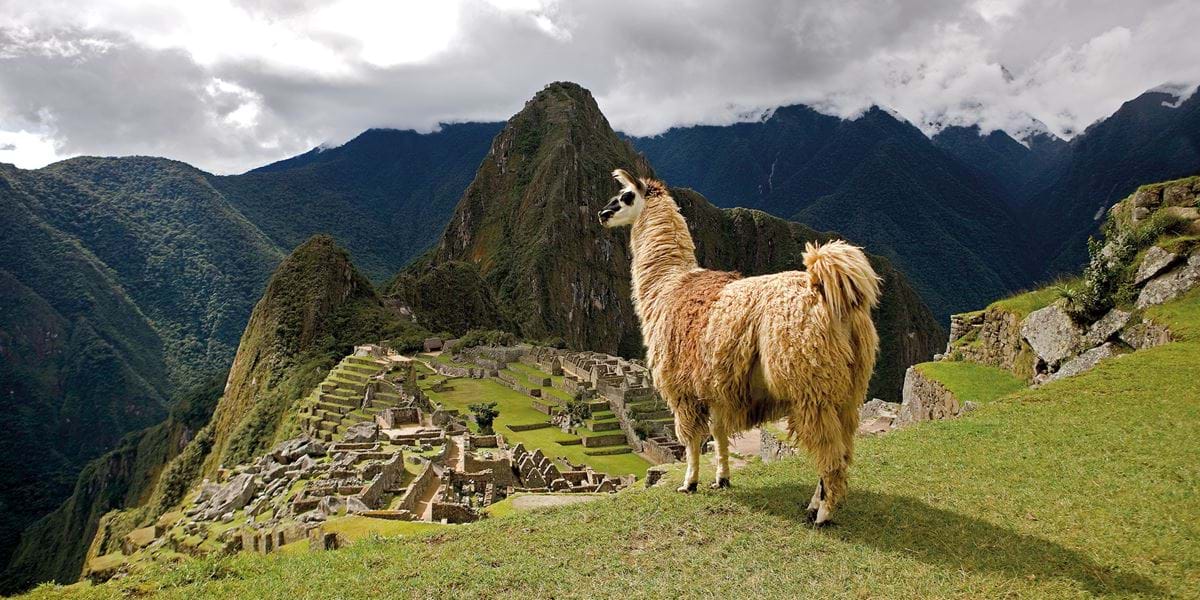
Machu Picchu

MACHU PICCHU
                                                                                                                                                                                                                                                                                                                                  Machu Picchu, additionally spelled Machupijchu, site of old Inca ruins situated around 50 miles (80 km) northwest of Cuzco, Peru, in the Cordillera de Vilcabamba of the Andes Mountains. It is roosted over the Urubamba River valley in a restricted seat between two sharp pinnacles—Machu Picchu ("Old Peak") and Huayna Picchu ("New Peak")— at a rise of 7,710 feet (2,350 meters). One of a handful of the major pre-Columbian vestiges observed to be almost flawless, Machu Picchu was assigned an UNESCO World Heritage site in 1983. 


Albeit the site got away from identification by the Spaniards, it might have been visited by the German traveler Augusto Berns in 1867. Be that as it may, Machu Picchu's presence was not generally known in the West until it was "found" in 1911 by the Yale University teacher Hiram Bingham, who was directed to the site by Melchor Arteaga, a neighborhood Quechua-talking occupant. Bingham had been looking for Vilcabamba (Vilcapampa), the "lost city of the Incas," from which the last Inca rulers drove a defiance to Spanish guideline until 1572. He refered to confirm from his 1912 unearthings at Machu Picchu, which were supported by Yale University and the National Geographic Society, in his marking of the site as Vilcabamba; notwithstanding, that translation is as of now not generally acknowledged. (By the by, many sources actually follow Bingham's point of reference and incorrectly mark Machu Picchu as the "lost city of the Incas.") Evidence later connected Vilcabamba with another ruin, Espíritu Pampa, which was likewise found by Bingham. In 1964 Espíritu Pampa was broadly uncovered under the course of the American traveler Gene Savoy. The site was abundantly weakened and congested with timberland, yet Savoy revealed stays there of nearly 300 Inca houses and at least 50 different structures, just as broad patios, demonstrating that Espíritu Pampa was a lot bigger settlement. 


Machu Picchu was additionally uncovered in 1915 by Bingham, in 1934 by the Peruvian paleologist Luis E. Valcarcel, and in 1940–41 by Paul Fejos. Extra disclosures all through the Cordillera de Vilcabamba have shown that Machu Picchu was one of a progression of pucaras (braced destinations), tambos (explorers' military enclosure, or motels), and sign pinnacles along the broad Inca foot roadway. 


The homes at Machu Picchu were likely fabricated and involved from the mid-fifteenth to the early or mid-sixteenth century. Machu Picchu's development style and other proof propose that it was a castle complex of the ruler Pachacuti Inca Yupanqui (ruled c. 1438–71). A few dozen skeletons were exhumed there in 1912, and, on the grounds that a large portion of those were at first distinguished as female, Bingham proposed that Machu Picchu was an asylum for the Virgins of the Sun (the Chosen Women), a tip top Inca bunch. Innovation at the turn of the 21st-century, in any case, recognized a huge extent of guys and an incredible variety in actual sorts. Both skeletal and material remaining parts currently propose to researchers that Machu Picchu filled in as an imperial retreat. The justification behind the site's surrender is likewise obscure, however absence of water might have been a factor. 


The significant degree of protection and the overall format of the ruin are astounding. Its southern, eastern, and western segments are encircled by many ventured agrarian porches in the past watered by a reservoir conduit framework. A portion of those patios were all the while being utilized by neighborhood Indians when Bingham showed up in 1911. Walkways and great many advances, comprising of stone squares just as tractions cut into fundamental stone, interface the courts, the local locations, the patios, the burial ground, and the significant structures. The Main Plaza, part of the way separated by wide porches, is at the north-focal finish of the site. At the southeastern end is the main conventional passageway, which prompts the Inca Trail. 


Not many of Machu Picchu's white rock structures have stonework as profoundly refined as that found in Cuzco, yet a few are deserving of note. In the southern piece of the ruin is the Sacred Rock, otherwise called the Temple of the Sun (it was known as the Mausoleum by Bingham). It fixates on a slanted stone mass with a little cavern; dividers of cut stone fill in a portion of its unpredictable elements. Transcending the stone is the horseshoe-formed walled in area known as the Military Tower. In the western piece of Machu Picchu is the sanctuary area, otherwise called the Acropolis. The Temple of the Three Windows is a lobby 35 feet (10.6 meters) long and 14 feet (4.2 meters) wide with three trapezoidal windows (the biggest known in Inca design) on one divider, which is worked of polygonal stones. It remains close to the southwestern corner of the Main Plaza. Likewise close to the Main Plaza is the Intihuatana (Hitching Post of the Sun), a particularly saved formal sundial comprising of a wide column and platform that were cut as a solitary unit and stand 6 feet (1.8 meters) tall. In 2000 this component was harmed during the shooting of a lager business. The Princess' Palace is a bi-level construction of exceptionally created stonework that most likely housed an individual from the Inca honorability. The Palace of the Inca is a complex of rooms with niched dividers and a yard. At the opposite finish of Machu Picchu, another way prompts the popular Inca Bridge, a rope structure that crosses the Urubamba River. Numerous other demolished urban areas—like that on the dull pinnacle of Huayna Picchu, which is available by an extended, steep flight of stairs and trail—were inherent the district; Machu Picchu is just the most broadly uncovered of these. 


Machu Picchu 


Finely created stonework of the Temple of the Sun is compared with less-talented development (closer view) at Machu Picchu, Peru. 


Machu Picchu is the most monetarily significant vacation destination in Peru, acquiring guests from around the world. Hence the Peruvian government wishes to localize the materials taken by Bingham to Yale. The remains are normally reached in a roadtrip from Cuzco by first taking a tight measure rail route and afterward climbing almost 1,640 feet (500 meters) from the Urubamba River valley on a serpentine street. More modest quantities of guests show up by climbing the Inca Trail. The piece of the path from the "km 88" train stop to Machu Picchu is typically climbed in three to six days. It is made out of a few thousand stone-cut advances, various high holding dividers, burrows, and different accomplishments of old style designing; the course navigates a wide scope of rises between around 8,530 and 13,780 feet (2,600 and 4,200 meters), and it is fixed with Inca remnants of different sorts and sizes. At Machu Picchu there is a lodging with a café, and warm showers are at the close by town of Aguas Calientes. The Inca Bridge and different pieces of Machu Picchu were harmed by a backwoods discharge in August 1997, yet rebuilding was started quickly a while later. Worry for the harm brought about by the travel industry was elevated by conversation of the structure of a streetcar connect to the site.


Imran Khan Biography


 Imran Khan, in full Imran Ahmad Khan Niazi, (conceived October 5, 1952, Lahore, Pakistan), Pakistani cricket player, lawmaker, altruist, and leader of Pakistan (2018–) who turned into a public legend by driving Pakistan's public group to a Cricket World Cup triumph in 1992 and later entered legislative issues as a pundit of government debasement in Pakistan. 

IMRAN KHAN

Early life and cricket vocation 


Khan was naturally introduced to a wealthy Pashtun family in Lahore and was instructed at first class schools in Pakistan and the United Kingdom, remembering the Royal Grammar School for Worcester and Aitchison College in Lahore. There were a few achieved cricket players in his family, including two senior cousins, Javed Burki and Majid Khan, who both filled in as commanders of the Pakistani public group. Imran Khan played cricket in Pakistan and the United Kingdom in his adolescents and kept playing while at the same time concentrating on way of thinking, governmental issues, and financial matters at the University of Oxford. Khan played his first counterpart for Pakistan's public group in 1971, yet he didn't assume a stable situation in the group until after his graduation from Oxford in 1976. 


By the mid 1980s Khan had separated himself as an excellent bowler and all-rounder, and he was named skipper of the Pakistani group in 1982. Khan's athletic ability and great looks made him a VIP in Pakistan and England, and his customary appearances at stylish London dance club gave feed to the British newspaper press. In 1992 Khan made his most noteworthy athletic progress when he drove the Pakistani group to its first World Cup title, overcoming England in the last. He resigned that very year, having gotten a standing as one of the best cricket players ever. 


After 1992 Khan stayed in the public eye as an altruist. He encountered a strict arousing, accepting Sufi otherworldliness and shedding his previous playboy picture. In one of his magnanimous undertakings, Khan went about as the essential asset raiser for the Shaukat Khanum Memorial Cancer Hospital, a specific malignancy emergency clinic in Lahore, which opened in 1994. The emergency clinic was named after Khan's mom, who had kicked the bucket of disease in 1985. 


Section into governmental issues 


After his retirement from cricket, Khan turned into a candid pundit of government blunder and debasement in Pakistan. He established his own ideological group, Pakistan Tehreek-e-Insaf (Pakistan Justice Movement; PTI), in 1996. In public decisions held the next year, the recently framed party won under 1% of the vote and neglected to win any seats in the National Assembly, yet it fared somewhat better in the 2002 races, winning a solitary seat that Khan filled. Khan kept up with that vote fixing was to be faulted for his party's low vote aggregates. In October 2007 Khan was among a gathering of legislators who left the National Assembly, fighting Pres. Pervez Musharraf's application in the impending official political race. In November Khan was momentarily detained during a crackdown against pundits of Musharraf, who had announced a highly sensitive situation. The PTI censured the highly sensitive situation, which finished in mid-December, and boycotted the 2008 public decisions to fight Musharraf's standard. 


Regardless of the PTI's battles in decisions, Khan's egalitarian positions discovered help, particularly among youngsters. He proceeded with his analysis of defilement and financial disparity in Pakistan and went against the Pakistani government's participation with the United States in battling aggressors close to the Afghan boundary. He likewise dispatched attacks against Pakistan's political and financial elites, whom he blamed for being Westernized and withdrawn from Pakistan's strict and social standards. 


Khan's works included Warrior Race: A Journey Through the Land of the Tribal Pathans (1993) and Pakistan: A Personal History (2011). 


Political rising 


In the months paving the way to the administrative decisions planned for mid 2013, Khan and his party drew enormous groups at meetings and pulled in the help of a few veteran lawmakers from Pakistan's set up parties. Additional proof of Khan's rising political fortunes came as an assessment of public sentiment in 2012 that viewed him to be the most famous political figure in Pakistan. 


Only days before administrative races in May 2013, Khan harmed his head and back when he tumbled from a stage at a mission rally. He showed up on TV from his clinic bed hours after the fact to make a last allure for citizens. The races delivered the PTI's most elevated aggregates at this point, yet the party actually won not exactly a large portion of the quantity of seats won by the Pakistan Muslim League–Nawaz (PML-N), drove by Nawaz Sharif. Khan blamed the PML-N for gear the races. After his requires an examination went neglected, he and other resistance pioneers drove four months of fights in late 2014 to constrain Sharif to venture down. 


The fights neglected to expel Sharif, yet doubts of debasement were enhanced when the Panama Papers connected his family to seaward possessions. Khan coordinated another arrangement of fights in late 2016 yet canceled them without a second to spare after the Supreme Court consented to open an examination. The examination excluded Sharif from holding public office in 2017, and he had to leave office. Khan, in the mean time, was additionally uncovered to have had seaward property in any case, in a different case, was not excluded by the Supreme Court. 


Races were held the next year, in July 2018. Khan ran on a foundation of battling debasement and neediness, even as he needed to ward off allegations that he was excessively comfortable with the tactical foundation. The PTI won a majority of seats in the National Assembly, permitting Khan to look for an alliance with autonomous individuals from the parliament. He became executive on August 18. 


Prevalence 


As executive, Khan confronted a mounting balance-of-installments emergency. However the economy was encountering development, imports and obligation responsibilities from before his term had soar lately, particularly as a result of the China-Pakistan Economic Corridor (CPEC) drive. Only weeks into his term as executive, the emergency deteriorated when the United States retained $300 million in guaranteed military guide, saying Pakistan had not done what's needed to stem psychological oppression. Khan endeavored to look for unfamiliar guide from "well disposed nations" first; in light of the fact that twelve past bundles from the International Monetary Fund (IMF) had neglected to tackle Pakistan's macroeconomic issues, his evasion of an IMF bailout reflected famous weariness with the IMF. After he couldn't get unfamiliar guide on positive conditions from different nations, notwithstanding, Pakistan presented a solicitation for crisis loaning from the IMF. He kept on looking for unfamiliar guide from different sources and later got guarantees of speculations from China, Saudi Arabia, and the United Arab Emirates. 


Beside seeking unfamiliar guide, Khan administered a few critical improvements in Pakistan's unfamiliar relations. The nation effectively carried the Taliban to dealings with the United States, further developing relations with the nation and with adjoining Afghanistan. In February 2019, in a demonstration of power against aggressors in Kashmir, who had as of late arranged a self destruction assault killing 40 Indian security work force, India dispatched an air attack in Pakistan without precedent for fifty years, raising feelings of dread of another contention between the two nations. Pakistan made light of the effect and seemed to try not to raise the circumstance. At the point when India again entered Pakistan's air space, Pakistan destroyed two contender flies and caught a pilot yet returned the pilot to India soon thereafter. After the episode, Khan carried out a crackdown on assailants, giving captures, shutting countless strict schools, and promising to refresh existing laws to reflect worldwide guidelines. 


The COVID-19 pandemic, which started in mid 2020, disturbed the country's financial troubles. Comparative with his faultfinders, Khan was delayed to underwrite a lockdown. Interestingly, the common government in Sindh, constrained by a resistance, rushed to execute a severe lockdown in March. Khan at last forced a cross country lockdown in April; in May his administration started confining lockdowns to areas with high disease rates. 


In the interim, Khan kept on confronting resistance for the two his crackdown on assailants and his cozy relationship with the tactical foundation. In late 2020 the significant resistance groups framed an alliance, the People's Democratic Movement (PDM), with the expressed objective of expanding the autonomy of regular citizen government from the tactical foundation. Fights and revitalizes coordinated by the PDM blamed Khan for being a manikin of the military and approached him to venture down. In March 2021 these gatherings boycotted a demonstration of approval in Khan's administration, which he endure barely with the help of his alliance accomplices.


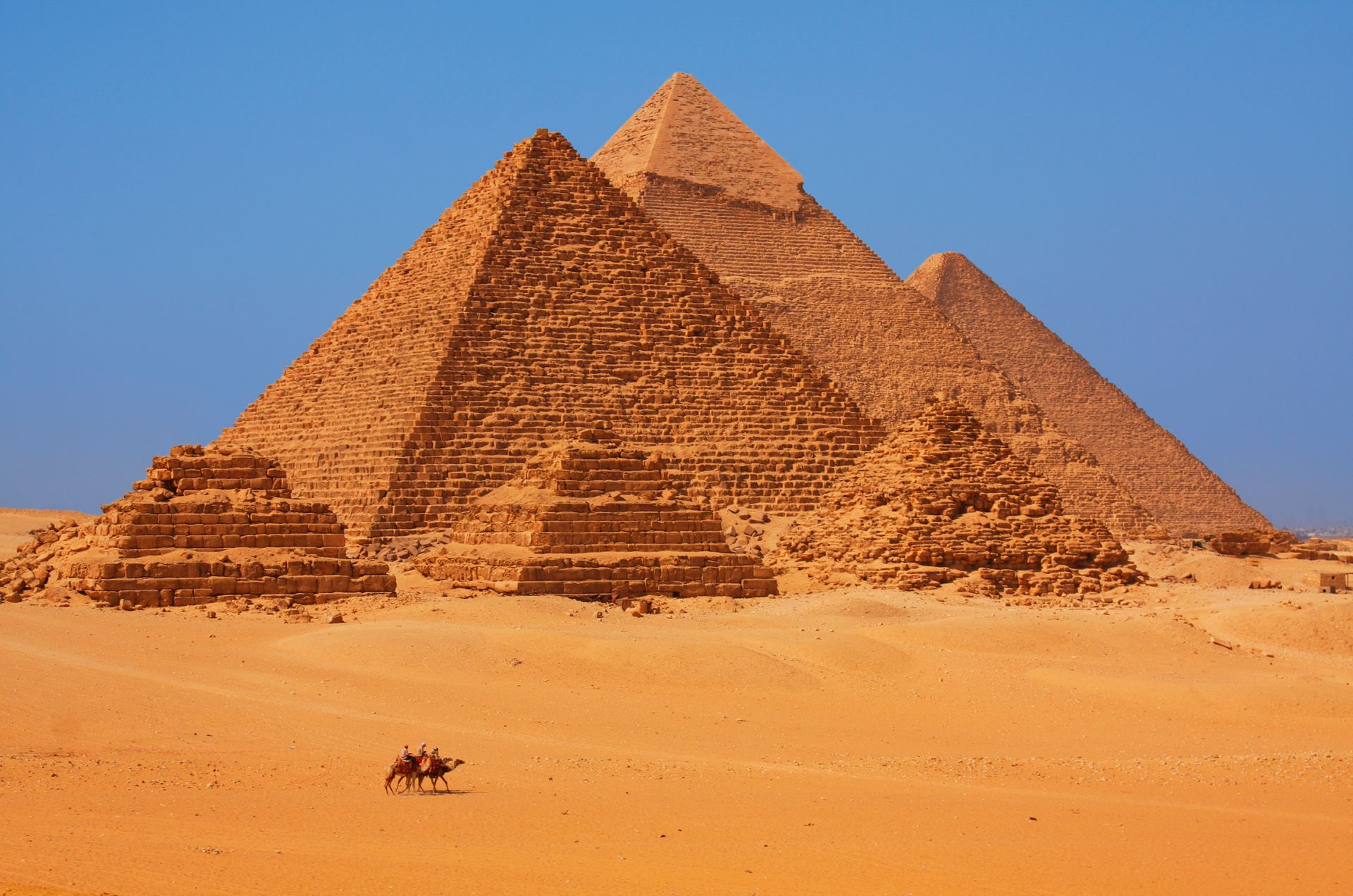
The Pyramids in Egypt.

PYRAMIDS OF EGYPT
 Worked during when Egypt was one of the most extravagant and most impressive civic establishments on the planet, the pyramids—particularly the Great Pyramids of Giza—are the absolute most grand man-made constructions ever. Their gigantic scope mirrors the special job that the pharaoh, or ruler, played in antiquated Egyptian culture. However pyramids were worked from the start of the Old Kingdom to the end of the Ptolemaic time frame in the fourth century A.D., the pinnacle of pyramid building started with the late third line and proceeded until generally the 6th (c. 2325 B.C.). Over 4,000 years after the fact, the Egyptian pyramids actually hold quite a bit of their highness, giving a brief look into the nation's rich and brilliant past. 


The Pharaoh in Egyptian Society 


During the third and fourth lines of the Old Kingdom, Egypt delighted in huge financial thriving and solidness. Lords stood firm on an interesting footing in Egyptian culture. Some place in the middle of human and heavenly, they were accepted to have been picked by the divine beings themselves to fill in as their go betweens on the planet. Along these lines, it was to everybody's greatest advantage to keep the lord's highness unblemished even after his passing, when he was accepted to become Osiris, divine force of the dead. The new pharaoh, thus, became Horus, the bird of prey god who filled in as defender of the sun god, Ra. 


Did you know? The pyramid's smooth, calculated sides represented the beams of the sun and were intended to assist the ruler's spirit with rising paradise and join the divine beings, especially the sun god Ra. 


Antiquated Egyptians accepted that when the ruler passed on, some portion of his soul (known as "ka") stayed with his body. To appropriately focus on his soul, the body was preserved, and all that the ruler would require in existence in the wake of death was covered with him, including gold vessels, food, furniture and different contributions. The pyramids turned into the focal point of a religion of the dead ruler that should proceed with well after his demise. Their wealth would give not exclusively to him, yet additionally for the family members, authorities and clerics who were covered close to him. 


The Early Pyramids 


From the start of the Dynastic Era (2950 B.C.), imperial burial places were cut into rock and covered with level roofed rectangular designs known as "mastabas," which were antecedents to the pyramids. The most seasoned known pyramid in Egypt was worked around 2630 B.C. at Saqqara, for the third tradition's King Djoser. Known as the Step Pyramid, it started as a conventional mastaba yet developed into something considerably more driven. Supposedly, the pyramid's draftsman was Imhotep, a minister and healer who about 1,400 years after the fact would be exalted as the supporter holy person of recorders and doctors. Throughout Djoser's almost 20-year rule, pyramid manufacturers collected six ventured layers of stone (rather than mud-block, as most prior burial places) that in the end arrived at a stature of 204 feet (62 meters); it was the tallest structure of now is the right time. The Step Pyramid was encircled by a complex of patios, sanctuaries and places of worship where Djoser could partake in his life following death. 


After Djoser, the ventured pyramid turned into the standard for imperial entombments, albeit none of those arranged by his dynastic replacements were finished (presumably due to their moderately short rules). The most punctual burial place developed as a "valid" (smooth-sided, not ventured) pyramid was the Red Pyramid at Dahshur, one of three internment structures worked for the main ruler of the fourth line, Sneferu (2613-2589 B.C.) It was named for the shade of the limestone blocks used to build the pyramid's center. 


The Great Pyramids of Giza 


No pyramids are more celebrated than the Great Pyramids of Giza, situated on a level on the west bank of the Nile River, on the edges of cutting edge Cairo. The most established and biggest of the three pyramids at Giza, known as the Great Pyramid, is the main enduring construction out of the celebrated Seven Wonders of the Ancient World. It was worked for Pharaoh Khufu (Cheops, in Greek), Sneferu's replacement and the second of the eight rulers of the fourth administration. However Khufu ruled for quite some time (2589-2566 B.C.), somewhat little is known about his rule past the glory of his pyramid. The sides of the pyramid's base normal 755.75 feet (230 meters), and its unique stature was 481.4 feet (147 meters), making it the biggest pyramid on the planet. Three little pyramids worked for Khufu's sovereigns are arranged close to the Great Pyramid, and a burial chamber was found close by containing the vacant stone coffin of his mom, Queen Hetepheres. Like different pyramids, Khufu's is encircled by columns of mastabas, where family members or authorities of the lord were covered to go with and support him in eternity. 


The center pyramid at Giza was worked for Khufu's child Pharaoh Khafre (2558-2532 B.C). The Pyramid of Khafre is the second tallest pyramid at Giza and contains Pharaoh Khafre's burial place. An extraordinary element worked inside Khafre's pyramid complex was the Great Sphinx, a gatekeeper sculpture cut in limestone with the top of a man and the body of a lion. It was the biggest sculpture in the antiquated world, estimating 240 feet in length and 66 feet high. In the eighteenth tradition (c. 1500 B.C.) the Great Sphinx would come to be adored itself, as the picture of a neighborhood type of the god Horus. The southernmost pyramid at Giza was worked for Khafre's child Menkaure (2532-2503 B.C.). It is the most brief of the three pyramids (218 feet) and is an antecedent of the more modest pyramids that would be built during the fifth and 6th traditions. 


Who Built The Pyramids? 


However some famous variants of history held that the pyramids were worked by slaves or outsiders constrained in the process of childbirth, skeletons uncovered from the space show that the specialists were presumably local Egyptian farming workers who dealt with the pyramids during the season when the Nile River overwhelmed a large part of the land close by. Roughly 2.3 million squares of stone (averaging around 2.5 tons each) must be cut, moved and gathered to fabricate Khufu's Great Pyramid. The antiquated Greek antiquarian Herodotus composed that it required 20 years to fabricate and required the work of 100,000 men, however later archeological proof recommends that the labor force may really have been around 20,000. 


The End of the Pyramid Era 


Pyramids kept on being worked all through the fifth and 6th administrations, however the overall quality and size of their development declined over this period, alongside the influence and abundance of the actual rulers. In the later Old Kingdom pyramids, starting with that of King Unas (2375-2345 B.C), pyramid manufacturers started to record composed records of occasions in the ruler's rule on the dividers of the internment chamber and the remainder of the pyramid's inside. Known as pyramid texts, these are the most punctual critical strict sytheses known from antiquated Egypt. 


The remainder of the incredible pyramid manufacturers was Pepy II (2278-2184 B.C.), the second ruler of the 6th line, who came to control as a young man and governed for quite a long time. When of his standard, Old Kingdom success was waning, and the pharaoh had lost a portion of his semi heavenly status as the force of non-imperial managerial authorities developed. Pepy II's pyramid, worked at Saqqara and finished exactly 30 years into his rule, was a lot more limited (172 feet) than others of the Old Kingdom. With Pepy's demise, the realm and solid focal government practically fell, and Egypt entered a tempestuous stage known as the First Intermediate Period. Later rulers, of the twelfth administration, would get back to pyramid working during the alleged Middle Kingdom stage, however it was never on similar scale as the Great Pyramids.


Saturday, October 23, 2021

Facebook

FACEBOOK
 Facebook, American organization offering on the web person to person communication administrations. Facebook was established in 2004 by Mark Zuckerberg, Eduardo Saverin, Dustin Moskovitz, and Chris Hughes, every one of whom were understudies at Harvard University. Facebook turned into the biggest informal organization on the planet, with more than one billion clients starting at 2012, and about a large portion of that number were utilizing Facebook consistently. The organization's base camp are in Menlo Park, California. 


Admittance to Facebook is for nothing, and the organization brings in the greater part of its cash from promotions on the Web website. New clients can make profiles, transfer photographs, join a prior gathering, and start new gatherings. The site has a large number, including Timeline, a space on every client's profile page where clients can post their substance and companions can post messages; Status, which empowers clients to make companions aware of their present area or circumstance; and News Feed, which advises clients regarding changes to their companions' profiles and status. Clients can visit with one another and send each other private messages. Clients can flag their endorsement of content on Facebook with the Like button, a component that likewise shows up on numerous other Web locales. 


The allure of Facebook stems to some extent from prime supporter Zuckerberg's demand from the earliest starting point that individuals be straightforward with regards to what their identity is; clients are taboo from embracing bogus characters. The organization's administration contended that straightforwardness is essential for shaping individual connections, sharing thoughts and data, and developing society all in all. It likewise noticed that the base up, shared availability among Facebook clients makes it simpler for organizations to associate their items with purchasers. 


The organization has a convoluted early history. It started at Harvard University in 2003 as Facemash, an internet based help for understudies to pass judgment on the engaging quality of their kindred understudies. Since the essential engineer, Zuckerberg, disregarded college strategy in procuring assets for the help, it was closed down following two days. Notwithstanding its mayflylike presence, 450 individuals (who casted a ballot multiple times) ran to Facemash. That achievement provoked Zuckerberg to enlist the URL http://www.thefacebook.com in January 2004. He then, at that point, made another informal organization at that location with individual understudies Saverin, Moskovitz, and Hughes. 


Get a Britannica Premium membership and access selective substance. 


Buy in Now 


The interpersonal organization TheFacebook.com dispatched in February 2004. Harvard understudies who pursued the help could post photos of themselves and individual data about their lives, for example, their class timetables and clubs they had a place with. Its ubiquity expanded, and soon understudies from other lofty schools, like Yale and Stanford colleges, were permitted to join. By June 2004 a larger number of than 250,000 understudies from 34 schools had joined, and that very year large companies, for example, the charge card organization MasterCard began paying for openness on the site. 


In September 2004 TheFacebook added the Wall to a part's internet based profile. This generally utilized element let a client's companions post data on their Wall and turned into a vital component in the social part of the organization. Before the finish of 2004, TheFacebook had arrived at 1,000,000 dynamic clients. In any case, the organization actually followed the then-driving internet based informal community, Myspace, which flaunted 5,000,000 individuals. 


The year 2005 ended up being crucial for the organization. It turned out to be just Facebook and presented "labeling" individuals in photographs that were presented on the site. With labels, individuals distinguished themselves as well as other people in pictures that could be seen by other Facebook companions. Facebook likewise permitted clients to transfer a limitless number of photographs. In 2005 secondary school understudies and understudies at colleges outside the United States were permitted to join the help. By the end of the year it had 6,000,000 month to month dynamic clients. 


In 2006 Facebook opened its enrollment past understudies to anybody beyond 13 years old. As Zuckerberg had anticipated, sponsors had the option to make new and powerful client connections. For instance, that year, family item maker Procter and Gamble pulled in 14,000 individuals to a limited time exertion by "communicating partiality" with a teeth-brightening item. This sort of direct shopper commitment for an enormous scope had not been conceivable before Facebook, and more organizations started utilizing the informal community for promoting and publicizing. 


Security stays a continuous issue for Facebook. It initially turned into a major issue for the organization in 2006, when it presented News Feed, which comprised of each change that a client's companions had made to their pages. After a clamor from clients, Facebook quickly carried out protection controls in which clients could handle what content showed up in News Feed. In 2007 Facebook dispatched a brief help considered Beacon that let individuals' companions see what items they had bought from taking an interest organizations. It fizzled in light of the fact that individuals felt that it infringed on their protection. To be sure, a review of shoppers in 2010 put Facebook in the last 5% of organizations in consumer loyalty to a great extent in light of security concerns, and the organization keeps on being censured for the intricacy of its client protection controls and for the successive changes it makes to them. 


In 2008 Facebook outperformed Myspace as the most-visited online media Web website. With the presentation of Live Feed, the organization additionally took a cutthroat swing at the developing prominence of Twitter, an informal community that runs a live channel of information administration like posts from individuals whom a client follows. Like Twitter's continuous stream of client posts, Live Feed pushed presents from companions consequently on a part's landing page. (Live Feed has since been fused into News Feed.) 


Facebook has turned into an incredible asset for political developments, starting with the U.S. official appointment of 2008, when in excess of 1,000 Facebook bunches were framed on the side of either Democratic competitor Barack Obama or Republican applicant John McCain. In Colombia the assistance was utilized to mobilize many thousands in fights the antigovernment FARC guerrilla defiance. In Egypt, activists fighting the public authority of Pres. Hosni Mubarak during the uprising of 2011 frequently coordinated themselves by framing bunches on Facebook. 


Facebook empowers outsider programming designers to utilize the assistance. In 2006 it delivered its application programming interface (API) so developers could compose programming that Facebook individuals could utilize straightforwardly through the help. By 2009 designers produced about $500 million in income for themselves through Facebook. The organization additionally acquires incomes from designers through installments for virtual or computerized items sold through outsider applications. By 2011 installments from one such organization, Zynga Inc., an internet game engineer, represented 12% of the organization's incomes. 


In February 2012 Facebook documented to turn into a public organization. Its first sale of stock (IPO) in May raised $16 billion, providing it with a market worth of $102.4 billion. On the other hand, the biggest IPO of an Internet organization to date was that of the web index organization Google Inc., which had raised $1.9 billion when it opened up to the world in 2004. Before the finish of the principal day of the stock's exchanging, Zuckerberg's property were assessed at more than $19 billion.


Nikola Tasla


 Anikola Tesla, (conceived July 9/10, 1856, Smiljan, Austrian Empire [now in Croatia]—kicked the bucket January 7, 1943, New York, New York, U.S.), Serbian American designer and specialist who found and protected the turning attractive field, the premise of most exchanging current hardware. He likewise fostered the three-stage arrangement of electric force transmission. He moved to the United States in 1884 and offered the patent freedoms to his means of exchanging current dynamos, transformers, and engines to George Westinghouse. In 1891 he developed the Tesla loop, an acceptance curl broadly utilized in radio innovation. 


Tesla was from a group of Serbian beginning. His dad was an Orthodox minister; his mom was uneducated however exceptionally astute. As he developed, he showed striking creative mind and inventiveness just as a lovely touch. 


Preparing for a designing profession, he went to the Technical University at Graz, Austria, and the University of Prague. At Graz he originally saw the Gram dynamo, which worked as a generator and, when switched, turned into an electric engine, and he considered a way of utilizing substituting flow to advantage. Afterward, at Budapest, he envisioned the guideline of the turning attractive field and created plans for an acceptance engine that would turn into his initial move toward the fruitful usage of substituting current. In 1882 Tesla went to work in Paris for the Continental Edison Company, and, while on task to Strassburg in 1883, he developed, after work hours, his first acceptance engine. Tesla cruised for America in 1884, showing up in New York with four pennies in his pocket, a couple of his own sonnets, and estimations for a flying machine. He previously discovered work with Thomas Edison, however the two creators were far separated in foundation and strategies, and their partition was inescapable. 


In May 1888 George Westinghouse, top of the Westinghouse Electric Company in Pittsburgh, purchased the patent freedoms to Tesla's polyphase means of rotating flow dynamos, transformers, and engines. The exchange accelerated a titanic force battle between Edison's immediate current frameworks and the Tesla-Westinghouse substituting current methodology, which in the end won out. 


Tesla before long settled his own lab, where his imaginative brain could be given free rein. He explored different avenues regarding shadowgraphs like those that later were to be utilized by Wilhelm Röntgen when he found X-beams in 1895. Tesla's endless examinations remembered work for a carbon button light, on the force of electrical reverberation, and on different sorts of lighting. 


To ease fears of exchanging flows, Tesla gave displays in his research center in which he lit lights by permitting power to move through his body. He was regularly welcome to address at home and abroad. The Tesla loop, which he imagined in 1891, is generally utilized today in radio and TVs and other electronic gear. That year additionally denoted the date of Tesla's U.S. citizenship. 


Westinghouse utilized Tesla's exchanging current framework to light the World's Columbian Exposition at Chicago in 1893. This achievement was a factor in their triumphant the agreement to introduce the main force hardware at Niagara Falls, which bore Tesla's name and patent numbers. The undertaking conveyed ability to Buffalo by 1896. 


In 1898 Tesla reported his innovation of a teleautomatic boat directed by controller. At the point when distrust was voiced, Tesla demonstrated his cases for it before a group in Madison Square Garden. 


In Colorado Springs, Colorado, where he remained from May 1899 until mid 1900, Tesla made what he viewed as his most significant revelation—earthbound fixed waves. By this disclosure he demonstrated that Earth could be utilized as a channel and made to resound at a specific electrical recurrence. He additionally lit 200 lights without wires from a distance of 40 km (25 miles) and made man-made lightning, creating streaks estimating 41 meters (135 feet). At one time he was sure he had gotten signals from one more planet in his Colorado research facility, a case that was met with ridicule in some logical diaries. 


Nikola Tesla 


Exposure photograph of Nikola Tesla in his research center in Colorado Springs, Colorado, in December 1899. Tesla presented with his "amplifying transmitter," which was equipped for delivering a great many volts of power. The release shown is 6.7 meters (22 feet) long. 


Wel

NIKOLA TASLA

come Library, London 


Getting back to New York in 1900, Tesla started development on Long Island of a remote world telecom tower, with $150,000 capital from the American lender J. Pierpont Morgan. Tesla asserted he got the credit by doling out 51% of his patent privileges of communication and telecommunication to Morgan. He expected to give overall correspondence and to outfit offices for sending pictures, messages, climate admonitions, and stock reports. The task was deserted in view of a monetary frenzy, work inconveniences, and Morgan's withdrawal of help. It was Tesla's most noteworthy loss. 


Tesla's work then, at that point, moved to turbines and different tasks. In view of an absence of assets, his thoughts stayed in his journals, which are as yet inspected by fans for unexploited hints. In 1915 he was seriously frustrated when a report that he and Edison were to share the Nobel Prize demonstrated mistaken. Tesla was the beneficiary of the Edison Medal in 1917, the most elevated honor that the American Institute of Electrical Engineers could present. 


Tesla permitted himself a couple of dear companions. Among them were the scholars Robert Underwood Johnson, Mark Twain, and Francis Marion Crawford. He was very unfeasible in monetary issues and a flighty, driven by impulses and an ever-evolving microorganism fear. However, he had a method of instinctively detecting stowed away logical insider facts and utilizing his innovative ability to demonstrate his theories. Tesla was a blessing to columnists who looked for shocking duplicate yet an issue to editors who were dubious how genuinely his advanced predictions ought to be respected. Acidic analysis welcomed his theories concerning correspondence with different planets, his affirmations that he could part the Earth like an apple, and his case of having created a passing beam equipped for obliterating 10,000 planes a ways off of 400 km (250 miles). 


After Tesla's passing the caretaker of outsider property seized his trunks, which held his papers, his recognitions and different distinctions, his letters, and his research center notes. These were ultimately acquired by Tesla's nephew, Sava Kosanovich, and later housed in the Nikola Tesla Museum in Belgrade. Hundreds recorded into New York City's Cathedral of St. John the Divine for his memorial service administrations, and a surge of messages recognized the departure of an incredible virtuoso. Three Nobel Prize beneficiaries addressed their recognition for "one of the remarkable minds of the world who prepared for large numbers of the innovative improvements of present day times."

Albert Einstein

ALBERT ENISTEIN
 Albert Einstein, (conceived March 14, 1879, Ulm, Württemberg, Germany—kicked the bucket April 18, 1955, Princeton, New Jersey, U.S.), German-conceived physicist who fostered the extraordinary and general speculations of relativity and won the Nobel Prize for Physics in 1921 for his clarification of the photoelectric impact. Einstein is by and large viewed as the most powerful physicist of the twentieth century. 


Einstein's folks were mainstream, working class Jews. His dad, Hermann Einstein, was initially a featherbed sales rep and later ran an electrochemical processing plant with moderate achievement. His mom, the previous Pauline Koch, ran the family. He had one sister, Maria (who passed by the name Maja), conceived two years after Albert. 


Einstein would compose that two "ponders" profoundly influenced his initial years. The previously was his experience with a compass at age five. He was perplexed that undetectable powers could divert the needle. This would prompt a long lasting interest with undetectable powers. The subsequent marvel came at age 12 when he found a book of calculation, which he ate up, calling it his "consecrated little math book." 


Einstein turned out to be profoundly strict at age 12, in any event, making a few tunes in recognition of God and reciting strict melodies while heading to school. This started to change, notwithstanding, after he read science books that went against his strict convictions. This test to set up power had a profound and enduring effect. At the Luitpold Gymnasium, Einstein regularly felt awkward and deceived by a Prussian-style instructive framework that appeared to smother innovation and inventiveness. One educator even let him know that he could never add up to anything. 


One more significant impact on Einstein was a youthful clinical understudy, Max Talmud (later Max Talmey), who frequently ate at the Einstein home. Writing turned into a casual guide, acquainting Einstein with higher science and theory. A critical defining moment happened when Einstein was 16 years of age. Writing had before acquainted him with a kids' science series by Aaron Bernstein, Naturwissenschaftliche Volksbucher (1867–68; Popular Books on Physical Science), in which the writer envisioned riding close by power that was going inside a message wire. Einstein then, at that point, asked himself the inquiry that would overwhelm his thinking for the following 10 years: What might a light radiate look like if you would run close by it? In the event that light were a wave, the light bar ought to seem fixed, similar to a frozen wave. Indeed, even as a youngster, however, he realized that fixed light waves had never been seen, so there was a conundrum. Einstein likewise composed his first "logical paper" around then ("The Investigation of the State of Aether in Magnetic Fields"). 


Einstein's schooling was upset by his dad's rehashed disappointments at business. In 1894, after his organization neglected to get a significant agreement to jolt the city of Munich, Hermann Einstein moved to Milan to work with a family member. Einstein was left at a boardinghouse in Munich and expected to complete his schooling. Alone, hopeless, and repulsed by the approaching possibility of military obligation when he turned 16, Einstein fled a half year after the fact and arrived on the doorstep of his amazed guardians. His folks understood the huge issues that he looked as a school dropout and draft dodger with no employable abilities. His possibilities didn't look encouraging. 


Luckily, Einstein could apply straightforwardly to the Eidgenössische Polytechnische Schule ("Swiss Federal Polytechnic School"; in 1911, following development in 1909 to full college status, it was renamed the Eidgenössische Technische Hochschule, or "Swiss Federal Institute of Technology") in Zürich without what might be compared to a secondary school certificate in the event that he passed its hardened placement tests. His imprints showed that he dominated in science and physical science, yet he fizzled at French, science, and science. Due to his extraordinary number related scores, he was permitted into the polytechnic depending on the prerequisite that he first completion his proper tutoring. He went to an exceptional secondary school run by Jost Winteler in Aarau, Switzerland, and graduated in 1896. He likewise revoked his German citizenship around then. (He was stateless until 1901, when he was conceded Swiss citizenship.) He became deep rooted companions with the Winteler family, with whom he had been boarding. (Winteler's girl, Marie, was Einstein's first love; Einstein's sister, Maja, would ultimately wed Winteler's child Paul; and his dear companion Michele Besso would wed their oldest girl, Anna.) 


Einstein would review that his years in Zürich were probably the most joyful long stretches of his life. He met numerous understudies who might become steadfast companions, like Marcel Grossmann, a mathematician, and Besso, with whom he delighted in extensive discussions about existence. He additionally met his future spouse, Mileva Maric, an individual physical science understudy from Serbia. 


From graduation to the "wonder year" of logical speculations of Albert Einstein 


After graduation in 1900, Einstein confronted probably the best emergency in his life. Since he concentrated on cutting edge subjects all alone, he frequently cut classes; this acquired him the ill will of certain educators, particularly Heinrich Weber. Shockingly, Einstein requested Weber for a letter from proposal. Einstein was consequently turned down for each scholarly position that he applied to. He later composed, 


I would have found [a job] quite a while in the past if Weber had not played an unscrupulous game with me. 


In the interim, Einstein's relationship with Maric extended, yet his folks fervently went against the relationship. His mom particularly protested her Serbian foundation (Maric's family was Eastern Orthodox Christian). Einstein challenged his folks, nonetheless, and in January 1902 he and Maric even had a youngster, Lieserl, whose destiny is obscure. (It is usually imagined that she kicked the bucket of red fever or was surrendered for reception.) 


In 1902 Einstein arrived at maybe the absolute bottom in his life. He was unable to wed Maric and backing a family without a task, and his dad's business failed. Frantic and jobless, Einstein took humble positions mentoring youngsters, yet he was terminated from even these positions. 


The defining moment came soon thereafter, when the dad of his long lasting companion Marcel Grossmann had the option to suggest him for a situation as a representative in the Swiss patent office in Bern. About then, at that point, Einstein's dad turned out to be truly sick and, not long before he kicked the bucket, gave his approval for his child to wed Maric. For quite a long time, Einstein would encounter gigantic misery recalling that his dad had kicked the bucket thinking him a disappointment. 


With a little however consistent pay interestingly, Einstein felt sufficiently certain to wed Maric, which he did on January 6, 1903. Their youngsters, Hans Albert and Eduard, were brought into the world in Bern in 1904 and 1910, separately. Looking back, Einstein's position at the patent office was a gift. He would rapidly get done with investigating patent applications, leaving him an opportunity to fantasize about the vision that had fixated him since he was 16: What might occur in the event that you dashed close by a light shaft? While at the polytechnic school he had concentrated on Maxwell's situations, which portray the idea of light, and found a reality obscure to James Clerk Maxwell himself—in particular, that the speed of light remaining parts as before regardless of how quick one maneuvers. This abuses Newton's laws of movement, nonetheless, in light of the fact that there is no outright speed in Isaac Newton's hypothesis. This knowledge drove Einstein to detail the guideline of relativity: "the speed of light is a consistent in any inertial casing (continually moving edge)." 


E = mc2 


E = mc2 


Brian Greene starts off his Daily Equation video series with Albert Einstein's popular condition E = mc2. 


During 1905, regularly called Einstein's "supernatural occurrence year," he distributed four papers in the Annalen der Physik, every one of which would change the direction of current physical science: 


1. "Über einen bite the dust Erzeugung und Verwandlung des Lichtes betreffenden heuristischen Gesichtspunkt" ("On a Heuristic Viewpoint Concerning the Production and Transformation of Light"), in which Einstein applied the quantum hypothesis to light to clarify the photoelectric impact. Assuming light happens in minuscule bundles (later called photons), it should take out electrons in a metal exactly. 


2. "Über kick the bucket von der molekularkinetischen Theorie der Wärme geforderte Bewegung von in ruhenden Flüssigkeiten suspendierten Teilchen" ("On the Movement of Small Particles Suspended in Stationary Liquids Required by the Molecular-Kinetic Theory of Heat"), in which Einstein offered the principal trial proof of the presence of iotas. By breaking down the movement of minuscule particles suspended in still water, called Brownian movement, he could compute the size of the bumping molecules and Avogadro's number (see Avogadro's law). 


3. "Zur Elektrodynamik bewegter Körper" ("On the Electrodynamics of Moving Bodies"), in which Einstein spread out the numerical hypothesis of uncommon relativity. 


4. "Ist bite the dust Trägheit eines Körpers von seinem Energieinhalt abhängig?" ("Does the Inertia of a Body Depend Upon Its Energy Content?"), submitted nearly as a reconsideration, which showed that relativity hypothesis prompted the condition E = mc2. This gave the main instrument to clarify the energy wellspring of the Sun and other star


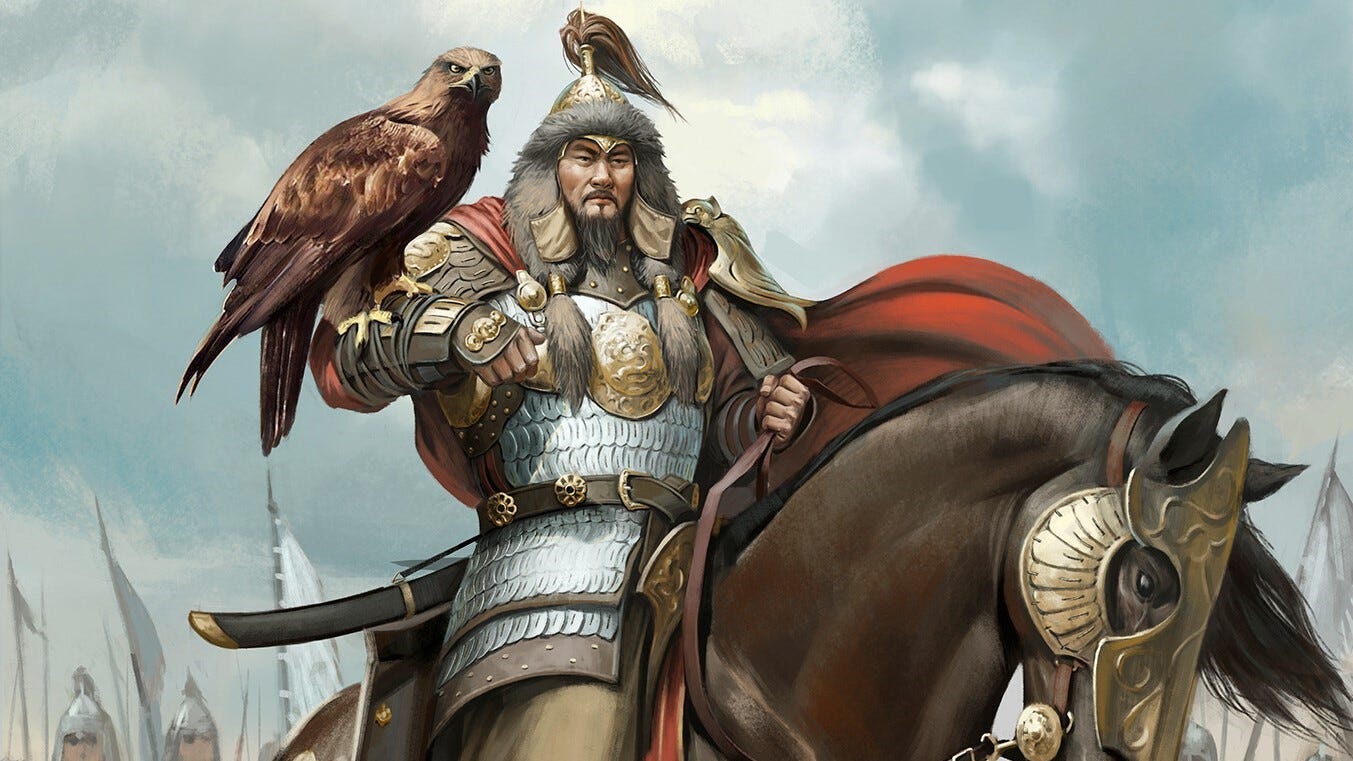
Genghis Khan

GENGHIS KHAN
 Genghis Khan, Genghis additionally spelled Chinggis, Chingis, Jenghiz, or Jinghis, unique name Temüjin, likewise spelled Temuchin, (conceived 1162, close to Lake Baikal, Mongolia—passed on August 18, 1227), Mongolian hero ruler, one of the most renowned winners of history, who merged clans into a bound together Mongolia and afterward stretched out his realm across Asia to the Adriatic Sea. 


Genghis Khan was a fighter and leader of virtuoso who, beginning from dark and immaterial beginnings, brought every one of the roaming clans of Mongolia under the standard of himself and his family in an inflexibly focused military state. He then, at that point, turned his consideration toward the settled people groups past the boundaries of his itinerant domain and started the series of missions of loot and triumph that in the long run conveyed the Mongol armed forces similar to the Adriatic Sea one way and the Pacific bank of China in the other, prompting the foundation of the incomparable Mongol Empire. 


Verifiable foundation 


Except for the adventure like Secret History of the Mongols (1240?), just non-Mongol sources give close contemporary data about the existence of Genghis Khan. Practically all authors, even the people who were in the Mongol assistance, have harped on the colossal obliteration fashioned by the Mongol intrusions. One Arab student of history transparently communicated his shock at the memory of them. Past the range of the Mongols and depending actually data, the thirteenth century recorder Matthew Paris considered them a "despicable country of Satan that spilled out like fallen angels from Tartarus so they are properly called Tartars." He was making a pun with the old style word Tartarus (Hell) and the antiquated ancestral name of Tatar borne by a portion of the travelers, however his record gets the fear that the Mongols evoked. As the originator of the Mongol country, the coordinator of the Mongol militaries, and the virtuoso behind their missions, Genghis Khan should share the standing of his kin, despite the fact that his commanders were habitually working all alone, a long way from direct management. All things considered, it is mixed up to consider the To be crusades as aimless invasions by groups of ravaging savages. Nor is it valid, as some have assumed, that these missions were by one way or another achieved by a dynamic drying up of Inner Asia that constrained the migrants to search for new fields. Nor, once more, were the Mongol attacks a special occasion. Genghis Khan was neither the first nor the last migrant victor to blast out of the steppe and threaten the settled fringe of Eurasia. His missions were just bigger in scale, more fruitful, and more enduring in actuality than those of different pioneers. They encroached all the more savagely upon those stationary people groups who had the propensity for recording occasions recorded as a hard copy, and they influenced a larger piece of the Eurasian landmass and a wide range of social orders. 


Two social orders were in steady contact, two social orders that were threatening together, if by some stroke of good luck as a result of their entirely gone against lifestyles, but these social orders were reliant. The wanderers required a portion of the staple results of the south and desired its extravagances. These could be had by profession, by burdening transient troops, or by furnished strikes. The settled people groups of China required the results of the steppe less significantly, yet they couldn't disregard the presence of the traveling brutes and were perpetually engrossed with opposing infringement by some means. A solid line, like the seventeenth century Manchu, could expand its tactical force straight over all Inner Asia. At different occasions the Chinese would need to set up one bunch of savages to contend with another, moving their help and shuffling their unions in order to keep any one clan from turning out to be excessively solid. 


The pattern of dynastic strength and shortcoming in China was joined by another cycle, that of solidarity and fracture among the people groups of the steppe. At the pinnacle of their force, a roaming clan not really set in stone pioneer could enslave different clans to its will and, if the circumstance in China was one of shortcoming, may expand its force past the steppe. In the end this expansion of itinerant control over the contradictory, inactive culture of the south brought its own enemy. The migrants lost their conventional premise of predominance—that lightning versatility that necessary minimal in the method of supply and grain—and were gobbled up by the Chinese they had prevailed. The cycle would then be continued; an amazing China would reappear, and disorder and negligible quarreling among vaporous tribal leaders would be the new example of life among the migrants. The historical backdrop of the Mongol successes shows this investigation impeccably, and it is against this foundation of political differences and strains that the existence of Genghis Khan should be assessed. His missions were not a baffling regular or even natural disaster however the result of a situation controlled by a trooper of aspiration, assurance, and virtuoso. He tracked down his ancestral world prepared for unification, when China and other settled states were, for some explanation, at the same time in decrease, and he took advantage of the circumstance. 


Early battles 


Different dates are given for the introduction of Temüjin (or Temuchin), as Genghis Khan was named—after a crushed pioneer by his dad, Yesügei, when Temüjin was conceived. The order of Temüjin's initial life is dubious. He might have been brought into the world in 1155, in 1162 (the date supported today in Mongolia), or in 1167. As per legend, his introduction to the world was promising, on the grounds that he appeared on the scene grasping a coagulation of blood. He is additionally said to have been of heavenly beginning, his first predecessor having been a dim wolf, "brought into the world with a fate from paradise on high." Yet his initial years were everything except promising. At the point when he was nine, Yesügei, an individual from the regal Borjigin group of the Mongols, was harmed by a band of Tatars, one more roaming individuals in continuation of an old fight. 


With Yesügei dead, the rest of the tribe, driven by the adversary Taychiut family, deserted his widow, Höelün, and her kids, considering them too frail to even think about practicing authority and taking advantage of the lucky break to usurp power. For a period the little family drove an existence of outrageous destitution, eating roots and fish rather than the typical wanderer diet of lamb and horse's milk. Two stories delineate both Temüjin's perplexed conditions and, all the more altogether, the force he previously had of drawing in allies through sheer power of character. Whenever he was caught by the Taychiut, who, instead of killing him, kept him around their camps, wearing a wooden collar. One evening, when they were devouring, Temüjin, seeing that he was in effect incompetently watched, thumped down the guard with a blow from his wooden collar and escaped. The Taychiut scanned the entire night for him, and he was seen by one of their kin, who, dazzled by the fire in his eyes, didn't upbraid him yet assisted him with getting away at the danger of his own life. On another event horse hoodlums came and took eight of the nine ponies that the little family possessed. Temüjin sought after them. In transit he halted to ask a youthful outsider, called Bo'orchu, on the off chance that he had seen the ponies. Bo'orchu quickly left the draining he was occupied with, gave Temüjin a new pony, and set out with him to assist with recuperating the lost monsters. He declined any prize however, perceiving Temüjin's position, appended himself irreversibly to him as a nökör, or free buddy, leaving his own family. 


Temüjin and his family obviously safeguarded a significant asset of esteem as individuals from the regal Borjigin group, disregarding their dismissal by it. In addition to other things, he had the option to guarantee the spouse to whom Yesügei had pledged him not long before his passing. In any case, the Merkit public, a clan living in northern Mongolia, had hard feelings, on the grounds that Yesügei had taken his own significant other, Höelün, from one of their men, and in their turn they violated Temüjin's better half Börte. Temüjin felt ready to engage Toghril, khan of the Kereit clan, with whom Yesügei had the relationship of anda, or sworn sibling, and around then the most impressive Mongol ruler, for help in recuperating Börte. He had the prescience to revive this kinship by giving Toghril a sable skin, which he most definitely had gotten as a marriage gift. He appears to have had nothing else to bring to the table; yet, in return, Toghril vowed to rejoin Temüjin's dispersed individuals, and he is said to have reclaimed his guarantee by outfitting 20,000 men and convincing Jamuka, a childhood companion of Temüjin's, to supply a military also. The difference between Temüjin's desperation and the immense armed force outfitted by his partners is difficult to clarify, and no power other than the story of the Secret History is accessible.


Sylvia Plath

LYLVIA PLATH
 Sylvia Plath, alias Lucas, (conceived October 27, 1932, Boston, Massachusetts, U.S.— passed on February 11, 1963, London, England), American writer whose most popular works, like the sonnets "Daddy" and "Woman Lazarus" and the clever The Bell Jar, distinctly express a feeling of estrangement and implosion intently attached to her own encounters and, likewise, the circumstance of ladies in mid-twentieth century America. 


Plath distributed her first sonnet at age eight. She entered and won numerous abstract challenges, while still in secondary school, she offered her first sonnet to The Christian Science Monitor and her first brief tale to Seventeen magazine. She entered Smith College on a grant in 1951 and was a cowinner of the Mademoiselle magazine fiction challenge in 1952. At Smith Plath accomplished significant imaginative, scholastic, and social achievement, however she additionally experienced extreme melancholy, endeavored self destruction, and went through a time of mental hospitalization. She moved on from Smith with most noteworthy distinctions in 1955 and happened to Newnham College in Cambridge, England, on a Fulbright association. In 1956 she wedded the English writer Ted Hughes; they had two youngsters. The couple isolated in 1962, after Hughes' undertaking with another lady. 


During 1957–58 Plath was an educator in English at Smith College. In 1960, soon after she got back to England with Hughes, her first assortment of sonnets showed up as The Colossus, which got great surveys. Her novel, The Bell Jar, was distributed in London in 1963 under the nom de plume Lucas. Firmly self-portraying, the book depicts the fit of anxiety and inevitable recuperation of a youthful school young lady and equals Plath's own breakdown and hospitalization in 1953. 


During her most recent three years Plath deserted the limitations and shows that had bound quite a bit of her initial work. She composed with incredible speed, delivering sonnets of distinct self-disclosure and admission. The nervousness, disarray, and uncertainty that spooky her were changed into refrains of incredible force and tenderness borne on blazes of sharp mind. Her sonnet "Daddy" and a few others investigate her tangled relationship with her dad, Otto Plath, who passed on when she was age eight. In 1963, after this explosion of efficiency, she ended her own life. 


Ariel (1965)— an assortment of Plath's later sonnets that included "Daddy" and one more of her notable sonnets, "Woman Lazarus" — started the development of a lot more extensive after of gave and energetic perusers than she had during her lifetime. Ariel got an audit in The New York Times that lauded its "persistent genuineness," "complexity of the utilization of rhyme," and "unpleasant power," and Poetry magazine noticed "an inescapable fretfulness, a positive criticalness to the sonnets." Plath immediately became perhaps the most famous American poet. The presence of little assortments of beforehand unpublished sonnets, including Crossing the Water (1971) and Winter Trees (1971), was invited by pundits and the public the same. The Bell Jar was reissued in Great Britain under her own name in 1966, and it was distributed in the United States without precedent for 1971. Johnny Panic and the Bible of Dreams, a book of brief tales and exposition, was distributed in 1977. 


The Collected Poems, which incorporates numerous beforehand unpublished sonnets, showed up in 1981 and got the 1982 Pulitzer Prize for verse, making Plath the first to get the honor after death. A book for kids that she had written in 1959, The It-Doesn't-Matter Suit, was distributed in 1996. Interest in Plath and her works proceeded into the 21st century. She had saved a diary for a lot of her life, and in 2000 The Unabridged Journals of Sylvia Plath, covering the years from 1950 to 1962, was distributed. A personal film of Plath featuring Gwyneth Paltrow (Sylvia) showed up in 2003. In 2009 Plath's radio play Three Women (1962) was organized expertly interestingly. A volume of Plath's letters, written in 1940–56, was distributed in 2017. A subsequent assortment—which contained her later letters, including various genuine notes to her therapist—seemed the next year. In 2019 the story Mary Ventura and the Ninth Kingdom, written in 1952, was distributed interestingly. 


A large number of Plath's post mortem distributions were aggregated by Hughes, who turned into the agent of her bequest. Notwithstanding, contention encompassed both the domain's administration of her work's copyright and his altering rehearses, particularly when he uncovered that he had annihilated the last diaries composed preceding her self destruction.