Friday, October 22, 2021

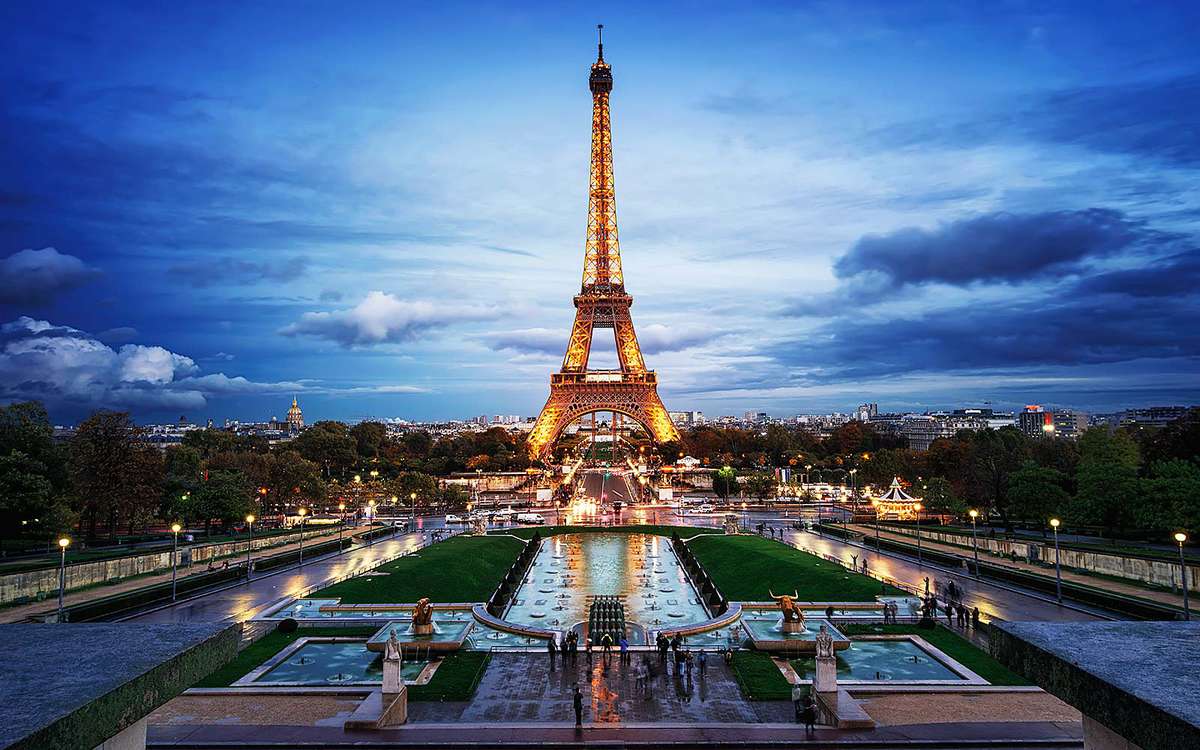
Eiffel Tower

EIFFEL TOWER

 Eiffel Tower, French Tour Eiffel, Parisian milestone that is likewise an innovative magnum opus in building-development history. At the point when the French government was coordinating the International Exposition of 1889 to praise the century of the French Revolution, a contest was held for plans for a reasonable landmark. In excess of 100 plans were submitted, and the Centennial Committee acknowledged that of the prominent scaffold engineer Gustave Eiffel. Eiffel's idea of a 300-meter (984-foot) tower assembled as a rule of open-cross section created iron excited awe, doubt, and no little resistance on stylish grounds. At the point when finished, the pinnacle filled in as the passageway door to the composition. 


Nothing distantly like the Eiffel Tower had at any point been fabricated; it was twice just about as high as the arch of St. Peter's in Rome or the Great Pyramid of Giza. As opposed to such more established landmarks, the pinnacle was raised in around two years (1887–89), with a little workforce, at slight expense. Utilizing his high level information on the conduct of metal curve and metal support structures under stacking, Eiffel planned a light, breezy, yet solid construction that augured an unrest in structural designing and engineering plan. Also, after it opened to the general population on May 15, 1889, it eventually justified itself stylishly. 


The Eiffel Tower remains on four cross section support docks that tighten internal and join to shape a solitary enormous vertical pinnacle. As they bend internal, the wharfs are associated with one another by organizations of supports at two levels that manage the cost of review stages for travelers. On the other hand, the four crescent curves at the pinnacle's base are simply stylish components that serve no underlying capacity. In light of their remarkable shape, which was directed halfway by designing contemplations yet in addition somewhat by Eiffel's imaginative sense, the docks expected lifts to rise on a bend; the glass-confine machines planned by the Otis Elevator Company of the United States became one of the chief provisions of the structure, building up it as one of the world's head vacation spots. 


The actual pinnacle is 300 meters (984 feet) high. It lays on a base that is 5 meters (17 feet) high, and a TV radio wire on the pinnacle provides it with an absolute height of 324 meters (1,063 feet). The Eiffel Tower was the tallest construction on the planet until the garnish off of the Chrysler Building in New York City in 1929. 


This article was most as of late overhauled and refreshed by Adam Augustyn, Managing Editor, Reference Content. 


Paris, France 

Paris: Around the Eiffel Tower 

Back inside as far as possible, south of Place Charles de Gaulle, is the Chaillot Palace (Palais de Chaillot). Remaining on an ascent on the Right Bank of the Seine, where the waterway starts its southwestward bend, the royal residence is a great spot from… 

Kedleston Hall 


Western engineering: Construction in iron and glass 


The Eiffel Tower (1887–89), the main seal of the Paris presentation of 1889, was planned by Gustave Eiffel, an architect who had accomplished remarkable work in the Paris Exposition of 1878 and in steel constructions, for example, the supported explanatory curves in the viaduct at… 


… Paris Exposition of 1889: the Eiffel Tower and the Gallery of Machines. Gustave Eiffel's pinnacle was 300 meters (1,000 feet) high, and its natural allegorical bended structure has turned into an image of Paris itself; its tallness was not surpassed until the garnish off of the 318.8-meter-(1,046-foot-) tall Chrysler Building…

Hagia Sophia

HAGIA SOPHIA

 Hagia Sophia is a colossal engineering wonder in Istanbul, Turkey, that was initially worked as a Christian basilica almost 1,500 years prior. Similar as the Eiffel Tower in Paris or the Parthenon in Athens, the Hagia Sophia is a long-suffering image of the cosmopolitan city. In any case, however striking as the design may be itself, its job throughout the entire existence of Istanbul—and, besides, the world—is likewise critical and addresses matters identified with worldwide legislative issues, religion, workmanship and engineering. 

The Hagia Sophia secures the Old City of Istanbul and has served for quite a long time as a milestone for both Orthodox Christians and Muslims, as its importance has moved with that of the prevailing society in the Turkish city. 


Istanbul rides the Bosporus waterway, a stream that fills in as a geographic boundary among Europe and Asia. The Turkish city of almost 15 million inhabitants in this way lies in the two landmasses. 

What Is the Hagia Sophia? 

The Hagia Sophia (Ayasofya in Turkish) was initially worked as a basilica for the Greek Orthodox Christian Church. Notwithstanding, its capacity has changed a few times in the hundreds of years since. 

Byzantine Emperor Constantius charged development of the principal Hagia Sophia in 360 A.D. At the hour of the primary church's development, Istanbul was known as Constantinople, taking its name from Constantius' dad, Constantine I, the principal leader of the Byzantine Empire. 

The principal Hagia Sophia highlighted a wooden rooftop. The design was caught fire in 404 A.D. during the uproars that happened in Constantinople because of political struggles inside the group of then-Emperor Arkadios, who had a turbulent rule from 395 to 408 A.D. 

Arkadios' replacement, Emperor Theodosios II, reconstructed the Hagia Sophia, and the new design was finished in 415. The second Hagia Sophia contained five naves and a great passage and was additionally covered by a wooden rooftop. 

In any case, somewhat more than one century after the fact, this would again end up being a weak spot for this significant basilica of the Greek Orthodox confidence, as the construction was singed briefly time during the purported "Nika revolts" against Emperor Justinian I, who governed from 527 to 565. 

Hagia Sophia History 

Incapable to fix the harm brought about by the fire, Justinian requested the destruction of the Hagia Sophia in 532. He dispatched famous draftsmen Isidoros (Milet) and Anthemios (Tralles) to construct another basilica. 

The third Hagia Sophia was finished in 537, and it stays standing today. 

The primary strict administrations in the "new" Hagia Sophia were hung on December 27, 537. At that point, Emperor Justinian is accounted for to have said, "My Lord, thank you for allowing me the opportunity to make such an adoring spot." 

The Hagia Sophia's Design 

From its opening, the third and last Hagia Sophia was without a doubt a noteworthy design. It consolidated the conventional plan components of an Orthodox basilica with an enormous, domed rooftop, and a semi-domed raised area with two narthex (or "yards"). 

The vault's supporting curves were covered with mosaics of six winged holy messengers called hexapterygon. 

With an end goal to make a terrific basilica that addressed all of the Byzantine Empire, Emperor Justinian declared that all territories under his standard send design pieces for use in its development. 

The marble utilized for the floor and roof was delivered in Anatolia (present-day eastern Turkey) and Syria, while different blocks (utilized in the dividers and portions of the floor) came from as distant as North Africa. The inside of Hagia Sophia is fixed with colossal marble sections that are said to have been intended to emulate moving water. 

Furthermore, the Hagia Sophia's 104 segments were imported from the Temple of Artemis in Ephesus, just as from Egypt. 

The structure estimates around 269 feet long and 240 feet in width and, at its most elevated point, the domed rooftop extends approximately 180 feet into the air. At the point when the first vault experienced a halfway breakdown in quite a while, substitution was planned by Isidore the Younger (the nephew of Isidoros, one of the first engineers) with primary ribs and a more articulated circular segment, and this rendition of the construction stays set up today. 

This focal vault lays on a ring of windows and is upheld by two semi-arches and two angled openings to make an enormous nave, the dividers of which were initially fixed with complex Byzantine mosaics produced using gold, silver, glass, earthenware and beautiful stones and depicting notable scenes and figures from the Christian Gospels. 

Hagia Sophia's Tumultuous History 

As Greek Orthodox was the authority religion of the Byzantines, the Hagia Sophia was viewed as the focal church of the confidence, and it accordingly turned into where new rulers were delegated. 

These functions occurred in the nave, where there is an Omphalion (navel of the earth), a huge roundabout marble part of bright stones in an entwining round plan, in the floor. 

The Hagia Sophia served this critical job in Byzantine culture and legislative issues for quite a bit of its initial 900 years of presence. 

In any case, during he Crusades, the city of Constantinople, and likewise the Hagia Sophia, was under Roman control for a short period in the thirteenth century. The Hagia Sophia was seriously harmed during this period, yet was fixed when the Byzantines by and by assumed responsibility for the encompassing city. 

The following huge time of progress for the Hagia Sophia started under 200 years after the fact, when the Ottomans, driven by Emperor Fatih Sultan Mehmed—known as Mehmed the Conqueror—caught Constantinople in 1453. The Ottomans renamed the city Istanbul. 

Redesigns to the Hagia Sophia 

As Islam was the focal religion of the Ottomans, the Hagia Sophia was remodeled into a mosque. As a feature of the change, the Ottomans covered large numbers of the first Orthodox-themed mosaics with Islamic calligraphy planned by Kazasker Mustafa Izzet. 

The boards or emblems, which were held tight the sections in the nave, include the names of Allah, the Prophet Muhammad, the initial four Caliphs, and the Prophet's two grandsons. 

The mosaic on the fundamental vault—accepted to be a picture of Christ—was additionally covered by gold calligraphy. 

A mihrab or nave was introduced in the divider, as is custom in mosques, to show the heading toward Mecca, one of the heavenly urban areas of Islam. Stool Emperor Kanuni Sultan Süleyman (1520 to 1566) introduced two bronze lights on each side of the mihrab, and Sultan Murad III (1574 to 1595) added two marble blocks from the Turkish city of Bergama, which date back to 4 B.C. 

Four minarets were additionally added to the first structure during this period, halfway for strict purposes (for the muezzin call to petition) and mostly to brace the construction following quakes that struck the city around this time. 

Under the standard of Sultan Abdülmecid, somewhere in the range of 1847 and 1849, the Hagia Sophia went through a broad remodel drove by Swiss draftsmen the Fossati siblings. Right now, the Hünkâr Mahfili (a different compartment for sovereigns to use for petition) was taken out and supplanted with one more close to the mihrab. 

Hagia Sofia Today 

The Hagia Sophia's part in legislative issues and religion stays a combative and significant one, even today—about 100 years after the fall of the Ottoman Empire. 

From 1935—nine years after the Republic of Turkey was set up by Ataturk—to 2020, the amazing construction was worked as a historical center by the public government. Starting in 2013, some Islamic strict forerunners in the nation looked to have the Hagia Sophia indeed opened as a mosque. In July 2020, the Turkish Council of State and President Erdoğan renamed it as a mosque.

The Blue Mosque

THE BLUE MOSQUE

 Sultanahmet Mosque, one of the most captivating bits of Istanbul's horizon, is likewise, simultaneously, one of the main images of Istanbul. Also, it isn't just its sublime appearance that makes it so intriguing. The Blue Mosque has numerous particular components isolating it from different mosques, for example, being the principal mosque with six minarets. In this article, we will impart to you the historical backdrop of the Blue Mosque, which is respected by everybody visiting Istanbul. Here is the essential history of Istanbul's absolute favorite! 


The chief of the mosque is Ahmed the First, who sat on the high position when he was 14 years of age.. 


The Blue Mosque, one of the main works of Ottoman history, was worked by the designer, Mehmet Aga, in line with Sultan Ahmet I. It is expressed in many sources that Ahmed the First, who sat on the lofty position as the fourteenth Ottoman king at 14 years old in 1603, was an exceptionally strict individual. Toward the start of the seventeenth century, a large number of the slopes of Istanbul were loaded up with mosques bearing the name of the kings. Also, Sultan Ahmet wanted to construct a sanctuary of exceptional magnificence as a badge of thankfulness to God. 


The Emperor picks the Ayşe Sultan Palace... 


King Ahmet requested a reasonable spot to be found for the development of the sanctuary. Out of the relative multitude of spots, the ruler picked the Ayşe Sultan Palace which lay on the hippodrome confronting the qiblah. The royal residence neglected the ocean, the region was exceptionally wide, it was near the Topkapi Palace and the environmental elements were not very swarmed. Consequently, it was an ideal spot for the grand sanctum to be constructed. Ruler Ahmed paid Ayşe Hanım "30 heaps of unadulterated gold dinar" and bought the castle and the proprietor was to be sure extremely satisfied with the exchange. 


Mehmet Ağa head draftsman of the royal residence... 


Mimar Mehmet AğaArchitect Mehmet Ağa was the main designer of the castle in those years. Mehmet Aga was an incredible designer famous for his extraordinary abilities in engineering. He was accordingly authorized by the ruler to assemble the mosque. King Ahmed requested that Mehmet Aga construct a mosque that could contend with heavenly landmarks like Hagia Sophia and Suleymaniye Mosque. After extended endeavors, Mehmet Aga drew up the arrangement of the mosque and introduced it to the king. King Ahmed paid attention to the designer's clarifications, preferred and supported the arrangement. 


"O Lord, Ahmed is your most faithful worker, if it's not too much trouble, acknowledge his contribution!" 


In 1609, Sultan Ahmed got things started on the mosque on a radiant Thursday. The pickax he used to do this with is in plain view in Topkapı Palace. At the point when work was in progress to kick things off on the mosque, the king was conveying soil in his lap and asked "O Lord, Ahmed is your most faithful worker, if it's not too much trouble, acknowledge his contribution!" Below is a portrayal of that day from the mouth of Evliya Çelebi:"All ace modelers and specialists assembled and work was begun to break the ground joined by the petitions of Üsküdarlı Mahmut Efendi and our lord Evliya Efendi." Firstly, Sultan Ahmed filled his lap with soil and implored "O Lord, Ahmed is your most steadfast worker, if it's not too much trouble, acknowledge his contribution!" conveying soil with the laborers... 


The development required 7 years, 5 months and 6 days... 


sultanahmet camii tarihiConstruction of the mosque was finished in seven years. At last, on Friday, June 2, 1616, a brilliant opening service was held, with the king and high-positioning state authorities likewise present. An incredible meal was presented to the visitors by the ruler and the mosque was opened with supplications. The vivid brilliance in the Blue Mosque, its extravagant dividers improved with tiles, its entryways adorned with mother of pearl, its 6 minarets and appearance, which made the outline of Istanbul significantly more wonderful, stirred esteem. In those days, individuals considered it the "New Mosque". It was renamed the "Blue Mosque" after the development of one more mosque in Eminönü called the New Mosque. 


A solitary mosque with 6 minarets... 


We referenced over that the Sultanahmet Mosque was the main mosque with 6 minarets. King Ahmet had requested that it be done as such as to assemble a grand mosque that stood apart from the others. Be that as it may, it drew reaction from the Muslim people group. Since in those days, Mecca was the main sanctuary with 6 minarets. In this way, individuals saw it as disregard to the Kaaba. To determine the issue, Sultan Ahmet had another minaret assembled and placated the dissenter voices. 


An internal splendor found in no other sanctuary... 


The Blue Mosque has a special spot due to its 6 minarets as well as a result of its inside beautifications and inside lighting. Because of the blue shading that overwhelms the inside of the mosque, today is as yet known as the Blue Mosque. The expense of the mosque was very high and the interesting engineering was supplemented with extraordinary enhancements. It is reputed that the crystal fixtures cost a fortune at the time the mosque was built.The Blue Mosque, an extraordinary Ottoman construction with an interesting appearance, is visited by a great many nearby and unfamiliar vacationers consistently. What falls upon us is to save this legacy in the most ideal manner and assist it with being given to people in the future ...

Taj mahal History

TAJ MAHAL HISTORY

 Taj Mahal, also spelled Tadj Mahall, mausoleum complex in Agra, western Uttar Pradesh state, northern India. The Taj Mahal was built by the Mughal emperor Shah Jahān (reigned 1628–58) to immortalize his wife Mumtaz Mahal (“Chosen One of the Palace”), who died in childbirth in 1631, having been the emperor’s inseparable companion since their marriage in 1612. India’s most famous and widely recognized building, it is situated in the eastern part of the city on the southern (right) bank of the Yamuna (Jumna) River. Agra Fort (Red Fort), also on the right bank of the Yamuna, is about 1 mile (1.6 km) west of the Taj Mahal.


Taj Mahal, Agra, India, designated a World Heritage site in 1983.

Encyclopædia Britannica, Inc.

In its harmonious proportions and its fluid incorporation of decorative elements, the Taj Mahal is distinguished as the finest example of Mughal architecture, a blend of Indian, Persian, and Islamic styles. Other attractions include twin mosque buildings (placed symmetrically on either side of the mausoleum), lovely gardens, and a museum. One of the most beautiful structural compositions in the world, the Taj Mahal is also one of the world’s most iconic monuments, visited by millions of tourists each year. The complex was designated a UNESCO World Heritage site in 1983.


History of construction

Discover the story behind Shah Jahān's decision to build the Taj Mahal mausoleum for his wife Mumtaz Maḥal

Discover the story behind Shah Jahān's decision to build the Taj Mahal mausoleum for his wife Mumtaz Maḥal

Learn why Mughal emperor Shah Jahān decided to build the Taj Mahal.

Encyclopædia Britannica, Inc.

The plans for the complex have been attributed to various architects of the period, though the chief architect was probably Ustad Aḥmad Lahawrī, an Indian of Persian descent. The five principal elements of the complex—main gateway, garden, mosque, jawāb (literally “answer”; a building mirroring the mosque), and mausoleum (including its four minarets)—were conceived and designed as a unified entity according to the tenets of Mughal building practice, which allowed no subsequent addition or alteration. Building commenced about 1632. More than 20,000 workers were employed from India, Persia, the Ottoman Empire, and Europe to complete the mausoleum itself by about 1638–39; the adjunct buildings were finished by 1643, and decoration work continued until at least 1647. In total, construction of the 42-acre (17-hectare) complex spanned 22 years.

Contemporary portrait of the fifth Mughal emperor, Shah Jahān (reigned 1628–58).

Nasli and Alice Heeramaneck Collection, Museum Associates Purchase Taj Mahal mausoleum and mosque

Taj Mahal mausoleum and mosque

Red sandstone mosque (left, west) and white marble mausoleum

A tradition relates that Shah Jahān originally intended to build another mausoleum across the river to house his own remains. That structure was to have been constructed of black marble, and it was to have been connected by a bridge to the Taj Mahal. He was deposed in 1658 by his son Aurangzeb, however, and was imprisoned for the rest of his life in Agra Fort.

Resting in the middle of a wide plinth 23 feet (7 metres) high, the mausoleum proper is of white marble that reflects hues according to the intensity of sunlight or moonlight. It has four nearly identical facades, each with a wide central arch rising to 108 feet (33 metres) at its apex and chamfered (slanted) corners incorporating smaller arches. The majestic central dome, which reaches a height of 240 feet (73 metres) at the tip of its finial, is surrounded by four lesser domes. The acoustics inside the main dome cause the single note of a flute to reverberate five times. The interior of the mausoleum is organized around an octagonal marble chamber ornamented with low-relief carvings and semiprecious stones (pietra dura). Therein are the cenotaphs of Mumtaz Mahal and Shah Jahān. Those false tombs are enclosed by a finely wrought filigree marble screen. Beneath the tombs, at garden level, lie the true sarcophagi. Standing gracefully apart from the central building, at each of the four corners of the square plinth, are elegant minarets.

Flanking the mausoleum ear the northwestern and northeastern edges of the garden, respectively, are two symmetrically identical buildings—the mosque, which faces east, and its jawāb, which faces west and provides aesthetic balance. Built of red Sikri sandstone with marble-necked domes and architraves, they contrast in both colour and texture with the mausoleum’s white marble.

The garden is set out along classical Mughal lines—a square quartered by long watercourses (pools)—with walking paths, fountains, and ornamental trees. Enclosed by the walls and structures of the complex, it provides a striking approach to the mausoleum, which can be seen reflected in the garden’s central pools.


The southern end of the complex is graced by a wide red sandstone gateway with a recessed central arch two stories high. White marble paneling around the arch is inlaid with black Qurʾānic lettering and floral designs. The main arch is flanked by two pairs of smaller arches. Crowning the northern and southern facades of the gateway are matching rows of white chattris (chhattris; cupola-like structures), 11 to each facade, accompanied by thin ornamental minarets that rise to some 98 feet (30 metres). At the four corners of the structure are octagonal towers capped with larger chattris.


Two notable decorative features are repeated throughout the complex: pietra dura and Arabic calligraphy. As embodied in the Mughal craft, pietra dura (Italian: “hard stone”) incorporates the inlay of semiprecious stones of various colours, including lapis lazuli, jade, crystal, turquoise, and amethyst, in highly formalized and intertwining geometric and floral designs. The colours serve to moderate the dazzling expanse of the white Makrana marble. Under the direction of Amānat Khan al-Shīrāzī, verses from the Qurʾān were inscribed across numerous sections of the Taj Mahal in calligraphy, central to Islamic artistic tradition. One of the inscriptions in the sandstone gateway is known as Daybreak (89:28–30) and invites the faithful to enter paradise. Calligraphy also encircles the soaring arched entrances to the mausoleum proper. To ensure a uniform appearance from the vantage point of the terrace, the lettering increases in size according to its relative height and distance from the viewer.


Over the centuries the Taj Mahal has been subject to neglect and decay. A major restoration was carried out at the beginning of the 20th century under the direction of Lord Curzon, then the British viceroy of India. More recently, air pollution caused by emissions from foundries and other nearby factories and exhaust from motor vehicles has damaged the mausoleum, notably its marble facade. A number of measures have been taken to reduce the threat to the monument, among them the closing of some foundries and the installation of pollution-control equipment at others, the creation of a parkland buffer zone around the complex, and the banning of nearby vehicular traffic. A restoration and research program for the Taj Mahal was initiated in 1998. Progress in improving environmental conditions around the monument has been slow, however.


From time to time the Taj Mahal has been subject to India’s political dynamics. Night viewing was banned there between 1984 and 2004 because it was feared that the monument would be a target of Sikh militants. In addition, it increasingly has come to be seen as an Indian cultural symbol. Some Hindu nationalist groups have attempted to diminish the importance of the Muslim influence in accounting for the origins and design of the Taj Mahal.

Monday, October 18, 2021

Allama iqbal

Iqbal is also known as Allama Iqbal and has also written, “Saare jahan se acha”. Iqbal was a poet-philosopher whose work promoted the philosophy of self-hood and dealt with the intellectual and cultural reconstruction of the Islamic world. He was born on November 9, 1877 in Sialkot Punjab (now in Pakistan) into a family with Kashmiri Brahmin ancestry. His grandfather left his ancestral village of Looehar in Kashmir after 1857 and settled in Sialkot and peddled Kashmiri shawls. Iqbal’s father was a reputed tailor in the area. Therefore, it was not until Iqbal’s elder brother Shaikh Atta Muhammad joined the Mechanical Engineering Services of the Army, that his family’s economic position became better: from a being a working-class family to a middle-class one. 

Iqbal is believed to be the reason that schoolboys in Pakistan remember the proverb “God helps those who help themselves” by heart because he repeatedly versified it according to Hafeez and Linda Malik, who wrote this in “Life of the Poet-Philosopher” in 1971. During his visit to South India in 1928 to deliver lectures on the invitation of the Madras Muslim Association he said that he was trying to “reconstruct Muslim religious philosophy with due regard to the philosophical tradition of Islam and the more recent developments in the domain of human knowledge,” according to Malik & Malik. 


Iqbal’s first published collection of poems came out in 1923 and is titled, “Bang-e-Dara” (Call of the Marching Bell). He wrote mostly in Urdu and Persian. Some of his works include Zabur-i-Ajam, Bal-i-Jibril (The Gabriel’s Wings), Musafir (The Wayfarer), Mysteries of the Selflessness, Secrets of the Self and The Reconstruction of Religious Thought in Islam. 


Iqbal also took keen interest and part in the politics of his time and is revered as the “Spiritual Father of Pakistan.” One of the Government of Pakistan’s statutory body’s is the “Iqbal Academy Pakistan” which offers courses in “Iqbal studies” to promote the understanding of his works and ideas. 


ALLAMA IQBAL

His role in the creation of Pakistan 

In 1930, Iqbal delivered a Presidential Address to the 25th Session of the All-India Muslim League in Allahabad where he expressed his thoughts on Islam and nationalism, unity of the Indian nation and one on the problem of defence. “The principle that each group is entitled to its free development on its own lines is not inspired by any feeling of narrow communalism. There are communalisms and communalisms. A community which is inspired by feelings of ill-will towards other communities is low and ignoble. I entertain the highest respect for the customs, laws, religious and social institutions of other communities. Nay, it is my duty, according to the teaching of the Quran, even to defend their places of worship, if need be,” he said. 

Iqbal is considered to have given the vision for the creation of Pakistan, whereas Jinnah is considered to be the one who shaped this vision. 

In 1937, Iqbal wrote two letters to Muhammad Ali Jinnah. In the first one dated May 28, 1937, he wrote, “After a long and careful study of Islamic Law, I have come to the conclusion that if this system of Law is properly understood and applied, at last, the right to subsistence is secured to everybody. But the enforcement and development of the Shariat of Islam is impossible in this country without a free Muslim state or states. This has been my honest conviction for many years and I still believe this to be the only way to solve the problem of bread for Muslims as well as to secure a peaceful India.”

In the second letter marked “Private and Confidential” dated June 21, 1937, Iqbal wrote, “Why should not the Muslims of North-West India and Bengal be considered as nations entitled to self-determination just as other nations in India and outside India are? Personally I think that the Muslims of North-West India and Bengal ought at present to ignore Muslim[-minority] provinces. This is the best course to adopt in the interests of both Muslim majority and minority provinces.” 

Iqbal’s confidence in Jinnah is believed to have sprouted from Jinnah’s integrity since he was the only Muslim leader with an unchallenged national status and because he did not have provincial or regional ties and Iqbal’s need to concretise his philosophy of “communalism of a higher kind” reflecting Iqbal’s interpretation of the universal values of Islam, according to the book, “Iqbal, Jinnah, and Pakistan: The Vision and the Reality”.


khalid bin waleed


 Khālid ibn al-Walīd, byname Sīf, or Sayf, Allāh (Arabic: “Sword of God”), (died 642), one of the two generals (with ʿAmr ibn al-ʿĀṣ) of the enormously successful Islamic expansion under the Prophet Muhammad and his immediate successors, Abū Bakr and ʿUmar.


Although he fought against Muhammad at Uḥud (625), Khālid was later converted (627/629) and joined Muhammad in the conquest of Mecca in 629; thereafter he commanded a number of conquests and missions in the Arabian Peninsula. After the death of Muhammad, Khālid recaptured a number of provinces that were breaking away from Islam. He was sent northeastward by the caliph Abū Bakr to invade Iraq, where he conquered Al-Ḥīrah. Crossing the desert, he aided in the conquest of Syria; and, though the new caliph, ʿUmar, formally relieved him of high command (for unknown reasons), Khālid remained the effective leader of the forces facing the Byzantine armies in Syria and Palestine.

KHALID BIN WALID


Routing the Byzantine armies, he surrounded Damascus, which surrendered on Sept. 4, 635, and pushed northward. Early in 636 he withdrew south of the Yarmūk River before a powerful Byzantine force that advanced from the north and from the coast of Palestine. The Byzantine armies were composed mainly of Christian Arab, Armenian, and other auxiliaries, however; and when many of these deserted the Byzantines, Khālid, reinforced from Medina and possibly from the Syrian Arab tribes, attacked and destroyed the remaining Byzantine forces along the ravines of the Yarmūk valley (Aug. 20, 636). Almost 50,000 Byzantine troops were slaughtered, which opened the way for many other Islamic conquests.

Wednesday, October 13, 2021

Stan lee

                                                                                                                                                                                                                                                                                                                                           
Stan Lee, original name Stanley Martin Lieber, (born December 28, 1922, New York, New York, U.S.—died November 12, 2018, Los Angeles, California), American comic book writer best known for his work with Marvel Comics. Among the hundreds of characters and teams that he helped to create were the Fantastic Four, Spider-Man, the Avengers, and the X-Men.

Early life and role at Marvel Comics

After graduating from high school at age 16, Lieber was hired as an editorial assistant for Timely Comics, and in 1942 he was promoted to editor. By that time he had begun writing comic-book scripts for Timely as Stan Lee, a pseudonym that eventually became his legal name. In the 1940s and ’50s—during which time the group, later named Atlas, struggled financially—Lee created several comic-book series, including The Witness, The Destroyer, Jack Frost, Whizzer, and Black Marvel.


In 1961 Lee and artist Jack Kirby created The Fantastic Four, about four astronauts who gain superpowers after a cosmic incident. The series made him and Atlas—now known as Marvel—major forces in the comics world. One year later Lee and artist Steve Ditko created Spider-Man. Lee, Kirby, and Ditko adopted a collaborative workflow that came to be known as “the Marvel method.” The technique gave artists significantly more input on story plotting, and it allowed Marvel to produce new content at a dizzying rate. The books joined a roster of increasingly successful series that also included The Incredible Hulk. Lee and Kirby added another winner to the group when they created The X-Men in 1963. A distinctive feature of Lee’s comic-book heroes is that they combine superhuman powers with human insecurities and emotions. Marvel continued to prosper, and in 1972 Lee became publisher and editorial director of the group.


Later work and participation in the Marvel Cinematic Universe

After working for Marvel in an official capacity for nearly 60 years, Lee began to pursue other projects, and in 1999 he formed Stan Lee Media, an Internet entertainment company built around his creations. Eventually his role at Marvel became that of chairman emeritus. Lee’s new firm did well with its first project, an animated online series called 7th Portal, which featured aliens who enter Earth through a “7th portal”—the Internet. After this initial success, however, the company was beset by a number of lawsuits and corruption charges. It filed for bankruptcy in February 2001. In 2004 Pow Entertainment was established for Lee’s various new characters and franchises. He and his partners sold the company in 2017.

STAN LEE 


Stan Lee as Willie Lumpkin in Fantastic Four (2005).

Copyright © 2005 Twentieth Century Fox Film Corporation and Marvel Entertainment

Film adaptations based on the series that Lee cocreated were highly successful. X-Men (2000) and Spider-Man (2002) launched blockbuster franchises that earned billions of dollars in box-office revenue worldwide. Other Lee creations to receive the Hollywood treatment were Daredevil (2003), Hulk (2003), and Iron Man (2008). Lee was often featured in cameo roles in those films, a tradition that continued after Disney purchased Marvel in 2009. A flood of Marvel films followed the acquisition, including those based on Lee-Kirby creations such as Thor (2011), the Avengers (2012), and Ant-Man (2015). Lee’s cameos became fan-favourite “Easter eggs” within the Marvel Cinematic Universe—as the films’ shared world came to be known—and he eventually appeared in dozens of Marvel movies, television shows, and video games. His brief role in Guardians of the Galaxy Vol. 2 (2017) clarified that Lee was, in fact, portraying the same character in each of these appearances and that his recurring role has been that of a chronicler of the events of the Marvel Universe. In November 2002 Lee filed a $10 million lawsuit against Marvel after failing to receive any profits from the first Spider-Man movie, and in 2005 the court ruled in favour of Lee.


In addition to his work in other media, Lee wrote books on comics and on his own life. His published works include Origins of Marvel Comics (1974), Excelsior!: The Amazing Life of Stan Lee (2002), and Stan Lee and the Rise and Fall of the American Comic Book (2003). In 2008 he was awarded a National Medal of Arts.

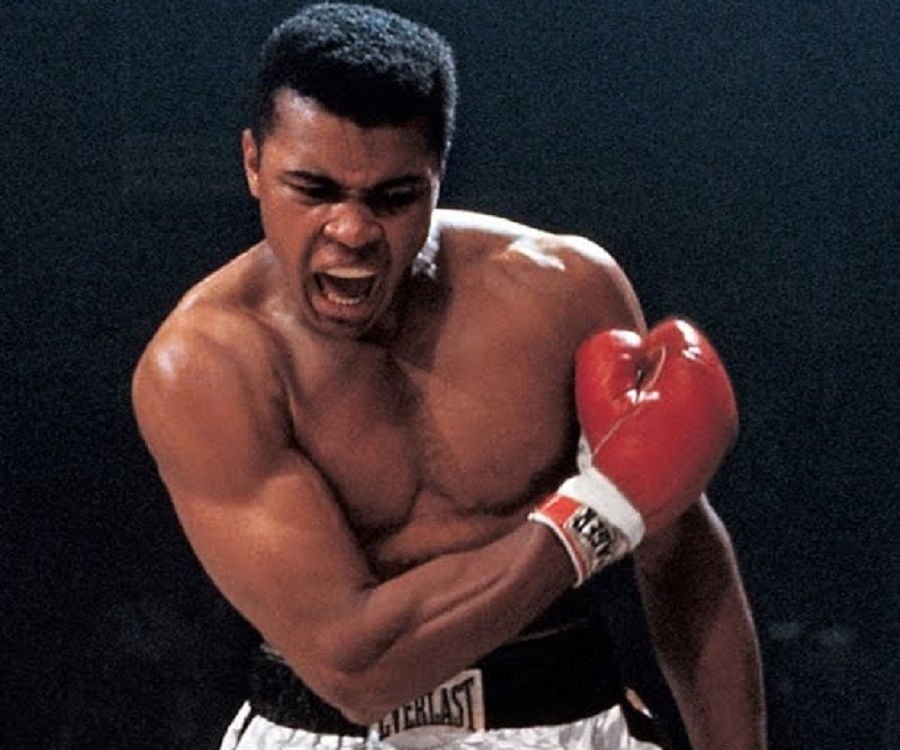
Muhammad Ali

👀
MUHAMMAD ALI
 Muhammad Ali, original name Cassius Marcellus Clay, Jr., (born January 17, 1942, Louisville, Kentucky, U.S.—died June 3, 2016, Scottsdale, Arizona), American professional boxer and social activist. Ali was the first fighter to win the world heavyweight championship on three separate occasions; he successfully defended this title 19 times.

Muhammad Ali (right) fighting Ernie Terrell, 1967.

UPI/Bettmann Archive

Cassius Marcellus Clay, Jr., grew up in the American South in a time of segregated public facilities. His father, Cassius Marcellus Clay, Sr., supported a wife and two sons by painting billboards and signs. His mother, Odessa Grady Clay, worked as a household domestic.


When Clay was 12 years old, he took up boxing under the tutelage of Louisville policeman Joe Martin. After advancing through the amateur ranks, he won a gold medal in the 175-pound division at the 1960 Olympic Games in Rome and began a professional career under the guidance of the Louisville Sponsoring Group, a syndicate composed of 11 wealthy white men

In his early bouts as a professional, Clay was more highly regarded for his charm and personality than for his ring skills. He sought to raise public interest in his fights by reading childlike poetry and spouting self-descriptive phrases such as “float like a butterfly, sting like a bee.” He told the world that he was “the Greatest,” but the hard realities of boxing seemed to indicate otherwise. Clay infuriated devotees of the sport as much as he impressed them. He held his hands unconventionally low, backed away from punches rather than bobbing and weaving out of danger, and appeared to lack true knockout power. The opponents he was besting were a mixture of veterans who were long past their prime and fighters who had never been more than mediocre. Thus, purists cringed when Clay predicted the round in which he intended to knock out an opponent, and they grimaced when he did so and bragged about each new conquest.

On February 25, 1964, Clay challenged Sonny Liston for the heavyweight championship of the world. Liston was widely regarded as the most intimidating, powerful fighter of his era. Clay was a decided underdog. But in one of the most stunning upsets in sports history, Liston retired to his corner after six rounds, and Clay became the new champion. Two days later Clay shocked the boxing establishment again by announcing that he had accepted the teachings of the Nation of Islam. On March 6, 1964, he took the name Muhammad Ali, which was given to him by his spiritual mentor, Elijah Muhammad.

For the next three years, Ali dominated boxing as thoroughly and magnificently as any fighter ever had. In a May 25, 1965, rematch against Liston, he emerged with a first-round knockout victory. Triumphs over Floyd Patterson, George Chuvalo, Henry Cooper, Brian London, and Karl Mildenberger followed. On November 14, 1966, Ali fought Cleveland Williams. Over the course of three rounds, Ali landed more than 100 punches, scored four knockdowns, and was hit a total of three times. Ali’s triumph over Williams was succeeded by victories over Ernie Terrell and Zora Folley.

Then, on April 28, 1967, citing his religious beliefs, Ali refused induction into the U.S. Army at the height of the war in Vietnam. This refusal followed a blunt statement voiced by Ali 14 months earlier: “I ain’t got no quarrel with them Vietcong.” Many Americans vehemently condemned Ali’s stand. It came at a time when most people in the United States still supported the war in Southeast Asia. Moreover, although exemptions from military service on religious grounds were available to qualifying conscientious objectors who were opposed to war in any form, Ali was not eligible for such an exemption, because he acknowledged that he would be willing to participate in an Islamic holy war.

Ali was stripped of his championship and precluded from fighting by every state athletic commission in the United States for three and a half years. In addition, he was criminally indicted and, on June 20, 1967, convicted of refusing induction into the U.S. armed forces and sentenced to five years in prison. Although he remained free on bail, four years passed before his conviction was unanimously overturned by the U.S. Supreme Court on a narrow procedural ground.

Meanwhile, as the 1960s grew more tumultuous, Ali’s impact upon American society was growing, and he became a lightning rod for dissent. Ali’s message of Black pride and Black resistance to white domination was on the cutting edge of the civil rights movement. Having refused induction into the U.S. Army, he also stood for the proposition that “unless you have a very good reason to kill, war is wrong.” As Black activist Julian Bond later observed, “When a figure as heroic and beloved as Muhammad Ali stood up and said, ‘No, I won’t go,’ it reverberated through the whole society.”

In October 1970, Ali was allowed to return to boxing, but his skills had eroded. The legs that had allowed him to “dance” for 15 rounds without stopping no longer carried him as surely around the ring. His reflexes, while still superb, were no longer as fast as they had once been. Ali prevailed in his first two comeback fights, against Jerry Quarry and Oscar Bonavena. Then, on March 8, 1971, he challenged Joe Frazier, who had become heavyweight champion during Ali’s absence from the ring. It was a fight of historic proportions, billed as the “Fight of the Century.” Frazier won a unanimous 15-round decision.

Following his loss to Frazier, Ali won 10 fights in a row, 8 of them against world-class opponents. Then, on March 31, 1973, a little-known fighter named Ken Norton broke Ali’s jaw in the second round en route to a 12-round upset decision. Ali defeated Norton in a rematch. After that he fought Joe Frazier a second time and won a unanimous 12-round decision. From a technical point of view, the second Ali-Frazier bout was probably Ali’s best performance in the ring after his exile from boxing.

On October 30, 1974, Ali challenged George Foreman, who had dethroned Frazier in 1973 to become heavyweight champion of the world. The bout (which Ali referred to as the “Rumble in the Jungle”) took place in the unlikely location of Zaire (now the Democratic Republic of the Congo). Ali was received by the people of Zaire as a conquering hero, and he did his part by knocking out Foreman in the eighth round to regain the heavyweight title. It was in this fight that Ali employed a strategy once used by former boxing great Archie Moore. Moore called the maneuver “the turtle” but Ali called it “rope-a-dope.” The strategy was that, instead of moving around the ring, Ali chose to fight for extended periods of time leaning back into the ropes in order to avoid many of Foreman’s heaviest blows.

Over the next 30 months, at the peak of his popularity as champion, Ali fought nine times in bouts that showed him to be a courageous fighter but a fighter on the decline. The most notable of these bouts occurred on October 1, 1975, when Ali and Joe Frazier met in the Philippines, 6 miles (9.5 km) outside Manila, to do battle for the third time. In what is regarded by many as the greatest prizefight of all time (the “Thrilla in Manila”), Ali was declared the victor when Frazier’s corner called a halt to the bout after 14 brutal rounds.

The final performances of Ali’s ring career were sad to behold. In 1978 he lost his title to Leon Spinks, a novice boxer with an Olympic gold medal but only seven professional fights to his credit. Seven months later Ali regained the championship with a 15-round victory over Spinks. Then he retired from boxing, but two years later he made an ill-advised comeback and suffered a horrible beating at the hands of Larry Holmes in a bout that was stopped after 11 rounds. The final ring contest of Ali’s career was a loss by decision to Trevor Berbick in 1981.

Ali’s place in boxing history as one of the greatest fighters ever is secure. His final record of 56 wins and 5 losses with 37 knockouts has been matched by others, but the quality of his opponents and the manner in which he dominated during his prime placed him on a plateau with boxing’s immortals. Ali’s most-tangible ring assets were speed, superb footwork, and the ability to take a punch. But perhaps more important, he had courage and all the other intangibles that go into making a great fighter.

Ali’s later years were marked by physical decline. Damage to his brain caused by blows to the head resulted in slurred speech, slowed movement, and other symptoms of Parkinson syndrome. However, his condition differed from chronic encephalopathy, or dementia pugilistica (which is commonly referred to as “punch drunk” in fighters), in that he did not suffer from injury-induced intellectual deficits.

Ali’s religious views also evolved over time. In the mid-1970s he began to study the Qurʾān seriously and turned to Orthodox Islam. His earlier adherence to the teachings of Elijah Muhammad (e.g., that white people are “devils” and there is no heaven or hell) were replaced by a spiritual embrace of all people and preparation for his own afterlife. In 1984 Ali spoke out publicly against the separatist doctrine of Louis Farrakhan, declaring, “What he teaches is not at all what we believe in. He represents the time of our struggle in the dark and a time of confusion in us, and we don’t want to be associated with that at all.”

Ali married his fourth wife, Lonnie (née Yolanda Williams), in 1986. He had nine children, most of whom avoided the spotlight of which Ali was so fond. One of his daughters, however, Laila Ali, pursued a career as a professional boxer during which she went undefeated in 24 bouts between 1999 and 2007 while capturing a number of titles in various weight classes.

In 1996 Ali was chosen to light the Olympic flame at the start of the Games of the XXVI Olympiad in Atlanta, Georgia. The outpouring of goodwill that accompanied his appearance confirmed his status as one of the most-beloved athletes in the world. The dramatic period of his life from 1964 to 1974 was the basis of the film Ali (2001), in which Will Smith starred as the boxer. His life story is told in the documentary film I Am Ali (2014), which includes audio recordings that he made throughout his career and interviews with his intimates. He also was the subject of the docuseries What’s My Name (2019) and Muhammad Ali (2021), the latter of which was codirected by Ken Burns. Ali was a member of the inaugural class of the International Boxing Hall of Fame in 1990, and in 2005 he was awarded the Presidential Medal of Freedom

Hazrat Muhmmad | S A W |

The Life of Hazrat Muhammad S A W

HAZRAT MUHAMMAD [ S A W ]

Written by By Abdullah ahmed

Orphaned at 6, Muhammad was saved from a life of slavery by his uncle who gave him a job in his successful caravan business. Married to a successful businesswoman in her own right, Muhammad saw firsthand how the leading families of the Quraysh lived. They were arrogant, reckless, niggardly and egotistical, believed only in riches, and took no responsibility for people outside their immediate, elite circle. Muhammad saw this decline in traditional values as a threat to the very existence of his tribe. He was sure that social reform had to be based on a new spiritual foundation, though before the revelations, he had no idea that his destiny would be to implement these changes.

Less than one hundred years after Muhammad’s death in 632 the first Muslim historians began to write about his life. These were Muhammad ibn Ishaq (d. 767), Muhammad ibn ‘Umar al-Waqidi (d. ca 820); Muhammad ibn Sa’d (d. 845); and Abu Jarir at-Tabari (d. 923). These scholars reconstructed their narrative from oral traditions and early documents, and through their effort we know more about Muhammad than we do of any other Prophet.

Nevertheless we need to keep in mind that the stories of Muhammad’s life were written to satisfy contemporary norms and included miraculous and legendary stories that might be misinterpreted today. As we have noted with the stories surrounding the Axial Sages, the Old Testament and the Gospels, such accounts are not to be taken literally. According to Reza Aslan in No god but God, The Origins, Evolution, and Future of Islam they “function as prophetic topos: a conventional literacy theme that can be found in most mythologies. Like the infancy narratives in the Gospels, these stories are not intended to relate historical events, but to elucidate the mystery of the prophetic experience. They answer the questions: What does it mean to be a prophet? … It is not important whether the stories describing the childhood of Muhammad, Jesus or David are true. What is important is what these stories say about our prophets, our messiahs, our kings: that theirs is a holy and eternal vocation, established by God from the moment of creation.”

Not much is known about his early childhood, but according to tradition Muhammad was born in Mecca in 570, the year known as the Year of the Elephant, in which Mecca was miraculously saved.

Tradition tells that Abraha, the Abyssinian Christian ruler of Yemen, attacked Mecca with a herd of elephants imported from Africa. Abraha’s goal was to destroy the Ka’ba and make the Christian church at Sana’ the new religious center of the Arab world. The terrified Quraysh had never seen an elephant, much less a whole herd, so they ran to the mountains to escape, leaving the Ka’ba with no defense. But just as it was about to be attacked, the sky went dark as a flock of birds, each carrying a stone in its beak, rained down on the invading army which was forced to retreat.


Muhammad was a Quraysh from the clan of Hashim. Many stories surround his childhood and birth, which was announced in a tale similar to the Christian story of Mary: Muhammad’s mother, a widow named Amina, one day heard a voice say to her: “You carry in your womb the lord of this people, and when he is born, say: ‘I place him beneath the protection of the One, from the evil of every envious person’, then name him Muhammad.”


Muhammad was orphaned at the age of six when his mother died, and went to live with his grandfather Abd-Al-Muttalib, who was in charge of providing the water of the Zam-Zam to pilgrims.  But by the time he was eight years old, his grandfather, too, had died and Muhammad was taken in by his Uncle Abu Talib and employed in his successful caravan business, so he was saved from a life of slavery or indebtedness experienced by so many orphans at the time. In a story that resembles that of Samuel in the Old Testament and others of that genre, it was on a trading expedition to Syria, when Muhammad was only nine years old, that a Christian monk named Bahira recognized him as “the Messenger of the Lord of the Worlds.”

At twenty-five, when Muhammad was still unmarried and dependent on his uncle, he met a very distant cousin, Khadija, a beautiful widow, then probably in her late thirties. Khadija was unusual for a woman of her time, she was a respected member of Meccan society and a very successful businesswoman in her own right. In spite of his tenuous social circumstances, according to Ibn Hisham, Muhammad had a reputation for “truthfulness, reliability, and nobility of character,” and Khadija entrusted him to take a caravan of goods to Syria and sell it. When he returned home with more profits than she anticipated, she proposed marriage to him and he accepted, thus acquiring status and entry into Meccan society. Although polygamy was the norm at the time, Muhammad and Khadija were in a monogamous marriage for twenty-five years until her death. They had six children.


As an orphan himself, Muhammad would have been aware of just how easy it was to fall outside Mecca’s religio-economic system. With his marriage and his businesses doing well, he now had access to the prosperous life. He saw firsthand that although the leading families of the Quraysh believed in the one God, this belief was not relevant to their lives; they had forgotten that everything depended upon Him.  Now that they were rich, they adhered to the very worst aspects of murawah and had thrown away the best: they were arrogant, reckless, niggardly and egotistical; they had become self-centered, no longer believing in anything but riches and took no responsibility for people outside their immediate, elite circle.

Stone entry to a cave

The cave Hira in the mountain Jabal al-Nour where, according to Muslim belief, Muhammad received his first revelation.

Muhammad saw the decline in traditional values as a threat to the very existence of his tribe. He was sure that social reform had to be based on a new spiritual foundation for it to actually take effect. As a trader, Muhammad came in frequent contact with Jews and Christians. According to the scholar Ikbal Ali Shah, Muhammad made “an exhaustive study of other religions.”  He was aware that his own people, although they believed in al-Lah, lacked a sacred book of their own.  “The people of the Book” had codified Laws that were both religious and social, governing their behavior from dawn to dusk. His own people had no such thing and because of this their lives were in chaos, many were suffering and destitute, and the whole tribe was in danger of extinction.


Before the revelations, he had no idea that his destiny would be to implement these vital changes. He was from a minor clan, the Hashim, and scholars point out that, in common with other prophets before him, he initially wanted nothing to do with what was happening to him and was extremely upset, so much so that without Khadija’s intervention “Mohammad might have gone through with his plan to end it all, and history would have turned out quite differently,

World war 2

WORLD WAR 2
 The instability created in Europe by the First World War (1914-18) set the stage for another international conflict—World War II—which broke out two decades later and would prove even more devastating. Rising to power in an economically and politically unstable Germany, Adolf Hitler, leader of the Nazi Party, rearmed the nation and signed strategic treaties with Italy and Japan to further his ambitions of world domination. Hitler’s invasion of Poland in September 1939 drove Great Britain and France to declare war on Germany, marking the beginning of World War II. Over the next six years, the conflict would take more lives and destroy more land and property around the globe than any previous war. Among the estimated 45-60 million people killed were 6 million Jews murdered in Nazi concentration camps as part of Hitler’s diabolical “Final Solution,” now known as the Holocaust.


Leading up to World War II


The devastation of the Great War (as World War I was known at the time) had greatly destabilized Europe, and in many respects World War II grew out of issues left unresolved by that earlier conflict. In particular, political and economic instability in Germany, and lingering resentment over the harsh terms imposed by the Versailles Treaty, fueled the rise to power of Adolf Hitler and National Socialist German Workers’ Party, abbreviated as NSDAP in German and the Nazi Party in English..


Did you know? As early as 1923, in his memoir and propaganda tract "Mein Kampf" (My Struggle), Adolf Hitler had predicted a general European war that would result in "the extermination of the Jewish race in Germany."


After becoming Chancellor of Germany in 1933, Hitler swiftly consolidated power, anointing himself Führer (supreme leader) in 1934. Obsessed with the idea of the superiority of the “pure” German race, which he called “Aryan,” Hitler believed that war was the only way to gain the necessary “Lebensraum,” or living space, for the German race to expand. In the mid-1930s, he secretly began the rearmament of Germany, a violation of the Versailles Treaty. After signing alliances with Italy and Japan against the Soviet Union, Hitler sent troops to occupy Austria in 1938 and the following year annexed Czechoslovakia. Hitler’s open aggression went unchecked, as the United States and Soviet Union were concentrated on internal politics at the time, and neither France nor Britain (the two other nations most devastated by the Great War) were eager for confrontation.


Outbreak of World War II (1939)

In late August 1939, Hitler and Soviet leader Joseph Stalin signed the German-Soviet Nonaggression Pact, which incited a frenzy of worry in London and Paris. Hitler had long planned an invasion of Poland, a nation to which Great Britain and France had guaranteed military support if it were attacked by Germany. The pact with Stalin meant that Hitler would not face a war on two fronts once he invaded Poland, and would have Soviet assistance in conquering and dividing the nation itself. On September 1, 1939, Hitler invaded Poland from the west; two days later, France and Britain declared war on Germany, beginning World War II.


On September 17, Soviet troops invaded Poland from the east. Under attack from both sides, Poland fell quickly, and by early 1940 Germany and the Soviet Union had divided control over the nation, according to a secret protocol appended to the Nonaggression Pact. Stalin’s forces then moved to occupy the Baltic States (Estonia, Latvia and Lithuania) and defeated a resistant Finland in the Russo-Finnish War. During the six months following the invasion of Poland, the lack of action on the part of Germany and the Allies in the west led to talk in the news media of a “phony war.” At sea, however, the British and German navies faced off in heated battle, and lethal German U-boat submarines struck at merchant shipping bound for Britain, sinking more than 100 vessels in the first four months of World War II.


World War II in the West (1940-41)


On April 9, 1940, Germany simultaneously invaded Norway and occupied Denmark, and the war began in earnest. On May 10, German forces swept through Belgium and the Netherlands in what became known as “blitzkrieg,” or lightning war. Three days later, Hitler’s troops crossed the Meuse River and struck French forces at Sedan, located at the northern end of the Maginot Line, an elaborate chain of fortifications constructed after World War I and considered an impenetrable defensive barrier. In fact, the Germans broke through the line with their tanks and planes and continued to the rear, rendering it useless. The British Expeditionary Force (BEF) was evacuated by sea from Dunkirk in late May, while in the south French forces mounted a doomed resistance. With France on the verge of collapse, Italy’s fascist dictator Benito Mussolini formed an alliance with Hitler, the Pact of Steel, and Italy declared war against France and Britain on June 10.


On June 14, German forces entered Paris; a new government formed by Marshal Philippe Petain (France’s hero of World War I) requested an armistice two nights later. France was subsequently divided into two zones, one under German military occupation and the other under Petain’s government, installed at Vichy France. Hitler now turned his attention to Britain, which had the defensive advantage of being separated from the Continent by the English Channel.


A
rticle3

To pave the way for an amphibious invasion (dubbed Operation Sea Lion), German planes bombed Britain extensively beginning in September 1940 until May 1941, known as the Blitz, including night raids on London and other industrial centers that caused heavy civilian casualties and damage. The Royal Air Force (RAF) eventually defeated the Luftwaffe (German Air Force) in the Battle of Britain, and Hitler postponed his plans to invade. With Britain’s defensive resources pushed to the limit, Prime Minister Winston Churchill began receiving crucial aid from the U.S. under the Lend-Lease Act, passed by Congress in early 1941.


Hitler vs. Stalin: Operation Barbarossa (1941-42)

By early 1941, Hungary, Romania and Bulgaria had joined the Axis, and German troops overran Yugoslavia and Greece that April. Hitler’s conquest of the Balkans was a precursor for his real objective: an invasion of the Soviet Union, whose vast territory would give the German master race the “Lebensraum” it needed. The other half of Hitler’s strategy was the extermination of the Jews from throughout German-occupied Europe. Plans for the “Final Solution” were introduced around the time of the Soviet offensive, and over the next three years more than 4 million Jews would perish in the death camps established in occupied Poland.


On June 22, 1941, Hitler ordered the invasion of the Soviet Union, codenamed Operation Barbarossa. Though Soviet tanks and aircraft greatly outnumbered the Germans’, Russian aviation technology was largely obsolete, and the impact of the surprise invasion helped Germans get within 200 miles of Moscow by mid-July. Arguments between Hitler and his commanders delayed the next German advance until October, when it was stalled by a Soviet counteroffensive and the onset of harsh winter weather.


World War II in the Pacific (1941-43)


With Britain facing Germany in Europe, the United States was the only nation capable of combating Japanese aggression, which by late 1941 included an expansion of its ongoing war with China and the seizure of European colonial holdings in the Far East. On December 7, 1941, 360 Japanese aircraft attacked the major U.S. naval base at Pearl Harbor in Hawaii, taking the Americans completely by surprise and claiming the lives of more than 2,300 troops. The attack on Pearl Harbor served to unify American public opinion in favor of entering World War II, and on December 8 Congress declared war on Japan with only one dissenting vote. Germany and the other Axis Powers promptly declared war on the United States.


After a long string of Japanese victories, the U.S. Pacific Fleet won the Battle of Midway in June 1942, which proved to be a turning point in the war. On Guadalcanal, one of the southern Solomon Islands, the Allies also had success against Japanese forces in a series of battles from August 1942 to February 1943, helping turn the tide further in the Pacific. In mid-1943, Allied naval forces began an aggressive counterattack against Japan, involving a series of amphibious assaults on key Japanese-held islands in the Pacific. This “island-hopping” strategy proved successful, and Allied forces moved closer to their ultimate goal of invading the mainland Japan.


Toward Allied Victory in World War II (1943-45)


In North Africa, British and American forces had defeated the Italians and Germans by 1943. An Allied invasion of Sicily and Italy followed, and Mussolini’s government fell in July 1943, though Allied fighting against the Germans in Italy would continue until 1945.


On the Eastern Front, a Soviet counteroffensive launched in November 1942 ended the bloody Battle of Stalingrad, which had seen some of the fiercest combat of World War II. The approach of winter, along with dwindling food and medical supplies, spelled the end for German troops there, and the last of them surrendered on January 31, 1943.


On June 6, 1944–celebrated as “D-Day”–the Allies began a massive invasion of Europe, landing 156,000 British, Canadian and American soldiers on the beaches of Normandy, France. In response, Hitler poured all the remaining strength of his army into Western Europe, ensuring Germany’s defeat in the east. Soviet troops soon advanced into Poland, Czechoslovakia, Hungary and Romania, while Hitler gathered his forces to drive the Americans and British back from Germany in the Battle of the Bulge (December 1944-January 1945), the last major German offensive of the war.


An intensive aerial bombardment in February 1945 preceded the Allied land invasion of Germany, and by the time Germany formally surrendered on May 8, Soviet forces had occupied much of the country. Hitler was already dead, having died by suicide on April 30 in his Berlin bunker.


World War II Ends (1945)

At the Potsdam Conference of July-August 1945, U.S. President Harry S. Truman (who had taken office after Roosevelt’s death in April), Churchill and Stalin discussed the ongoing war with Japan as well as the peace settlement with Germany. Post-war Germany would be divided into four occupation zones, to be controlled by the Soviet Union, Britain, the United States and France. On the divisive matter of Eastern Europe’s future, Churchill and Truman acquiesced to Stalin, as they needed Soviet cooperation in the war against Japan.


Heavy casualties sustained in the campaigns at Iwo Jima (February 1945) and Okinawa (April-June 1945), and fears of the even costlier land invasion of Japan led Truman to authorize the use of a new and devastating weapon. Developed during a top secret operation code-named The Manhattan Project, the atomic bomb was unleashed on the Japanese cities of Hiroshima and Nagasaki in early August. On August 15, the Japanese government issued a statement declaring they would accept the terms of the Potsdam Declaration, and on September 2, U.S. General Douglas MacArthur accepted Japan’s formal surrender aboard the USS Missouri in Tokyo Bay.


African American Servicemen Fight Two Wars

A tank and crew from the 761st Tank Battalion in front of the Prince Albert Memorial in Coburg, Germany, 1945. (Credit: The National Archives)

A tank and crew from the 761st Tank Battalion in front of the Prince Albert Memorial in Coburg, Germany, 1945. 


The National Archives


World War II exposed a glaring paradox within the United States Armed Forces. Although more than 1 million African Americans served in the war to defeat Nazism and fascism, they did so in segregated units. The same discriminatory Jim Crow policies that were rampant in American society were reinforced by the U.S. military. Black servicemen rarely saw combat and were largely relegated to labor and supply units that were commanded by white officers.


There were several African American units that proved essential in helping to win World War II, with the Tuskegee Airmen being among the most celebrated. But the Red Ball Express, the truck convoy of mostly Black drivers were responsible for delivering essential goods to General George S. Patton’s troops on the front lines in France. The all-Black 761st Tank Battalion fought in the Battle of the Bulge, and the 92 Infantry Division, fought in fierce ground battles in Italy. Yet, despite their role in defeating fascism, the fight for equality continued for African American soldiers after the World War II ended. They remained in segregated units and lower-ranking positions, well into the Korean War, a few years after President Truman signed an executive order to desegregate the U.S. military in 1948.


READ MORE: Black Americans Who Served in WWII Faced Discrimination Abroad and at Home


World War II Casualties and Legacy

World War II proved to be the deadliest international conflict in history, taking the lives of 60 to 80 million people, including 6 million Jews who died at the hands of the Nazis during the Holocaust. Civilians made up an estimated 50-55 million deaths from the war, while military comprised 21 to 25 million of those lost during the war. Millions more were injured, and still more lost their homes and property. 


The legacy of the war would include the spread of communism from the Soviet Union into eastern Europe as well as its eventual triumph in China, and the global shift in power from Europe to two rival superpowers–the United States and the Soviet Union–that would soon face off against each other in the Cold War.
World war 1

WORLD WAR 1

 A recent list of the hundred most important news stories of the twentieth century ranked the onset of World War I eighth. This is a great error. Just about everything that happened in the remainder of the century was in one way or another a result of World War I, including the Bolshevik Revolution in Russia, World War II, the Holocaust, and the development of the atomic bomb. The Great Depression, the Cold War, and the collapse of European colonialism can also be traced, at least indirectly, to the First World War.


World War I killed more people--more than 9 million soldiers, sailors, and flyers and another 5 million civilians--involved more countries--28--and cost more money--$186 billion in direct costs and another $151 billion in indirect costs--than any previous war in history. It was the first war to use airplanes, tanks, long range artillery, submarines, and poison gas. It left at least 7 million men permanently disabled.


World War I probably had more far-reaching consequences than any other proceeding war. Politically, it resulted in the downfall of four monarchies--in Russia in 1917, in Austria-Hungary and Germany in 1918, and in Turkey in 1922. It contributed to the Bolshevik rise to power in Russia in 1917 and the triumph of fascism in Italy in 1922. It ignited colonial revolts in the Middle East and in Southeast Asia.


Economically, the war severely disrupted the European economies and allowed the United States to become the world's leading creditor and industrial power. The war also brought vast social consequences, including the mass murder of Armenians in Turkey and an influenza epidemic that killed over 25 million people worldwide.


Few events better reveal the utter unpredictability of the future. At the dawn of the 20th century, most Europeans looked forward to a future of peace and prosperity. Europe had not fought a major war for 100 years. But a belief in human progress was shattered by World War I, a war few wanted or expected. At any point during the five weeks leading up to the outbreak of fighting the conflict might have been averted. World War I was a product of miscalculation, misunderstanding, and miscommunication.


No one expected a war of the magnitude or duration of World War I. At first the armies relied on outdated methods of communication, such as carrier pigeons. The great powers mobilized more than a million horses. But by the time the conflict was over, tanks, submarines, airplane-dropped bombs, machine guns, and poison gas had transformed the nature of modern warfare. In 1918, the Germans fired shells containing both tear gas and lethal chlorine. The tear gas forced the British to remove their gas masks; the chlorine then scarred their faces and killed them.


In a single day at the Battle of the Somme in 1916, 100,000 British troops plodded across no man's land into steady machine-gun fire from German trenches a few yards away. Some 60,000 were killed or wounded. At the end of the battle, 419,654 British men were killed, missing, or wounded.Four years of war killed a million troops from the British Empire, 1.5 million troops from the Hapsburg Empire, 1.7 million French troops, 1.7 million Russians, and 2 million German troops. The war left a legacy of bitterness that contributed to World War II twenty-one years later