 |
| GREAT WALL OF CHINA |
Great Wall of China was worked over hundreds of years by China's heads to secure their region. Today, it extends for large number of miles along China's notable northern boundary.
The Great Wall of China
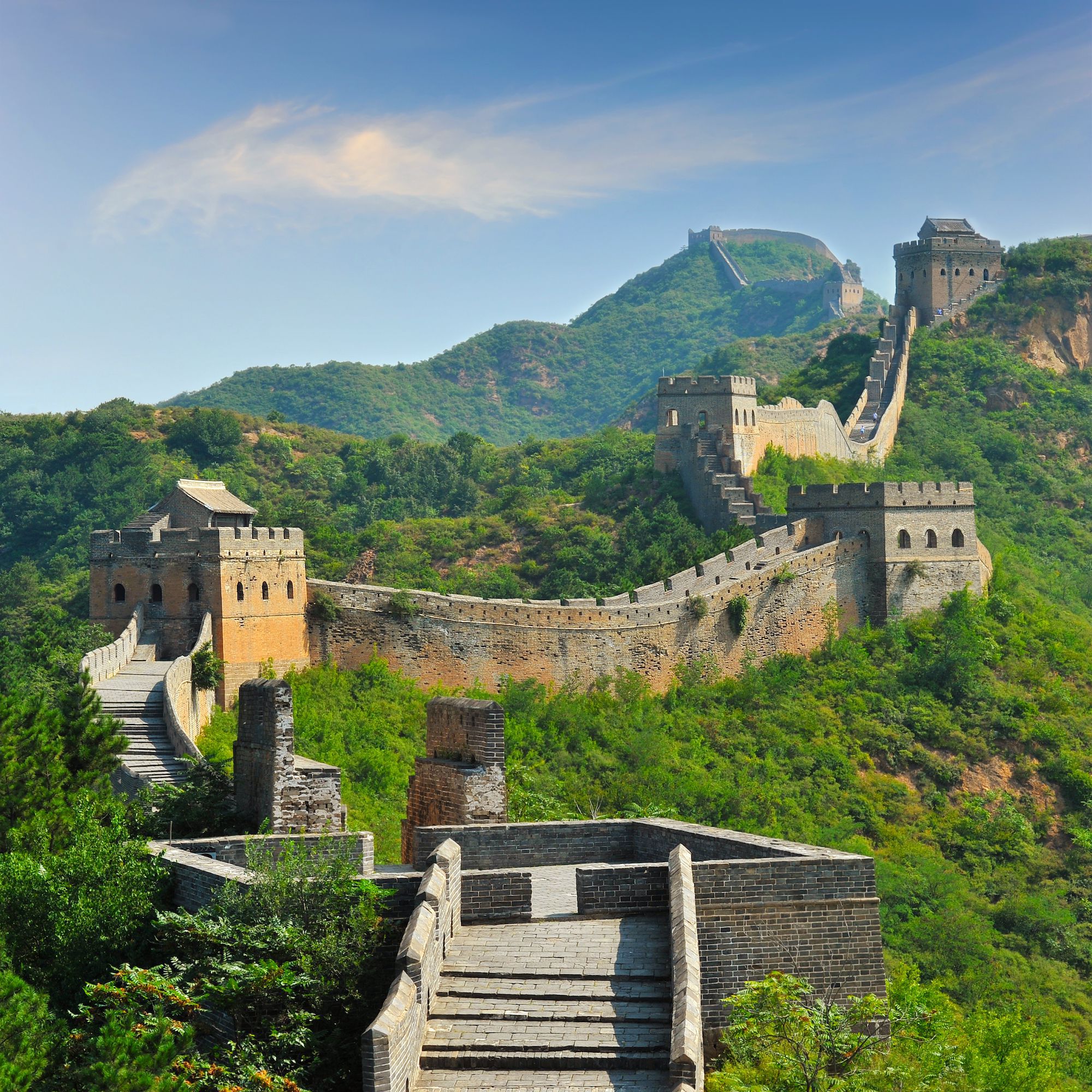
The Great Wall of China is one of the most famous designs in the whole world. The Jinshanling segment in Hebei Province, China, imagined here, is just a little piece of the divider that stretches more than 4,000 kilometers (2,500 miles).
The one thing the vast majority "know" about the Great Wall of China—that it is one of the main man-made constructions noticeable from space—isn't in reality evident. Since the divider looks a great deal like the stone and soil that encompass it, it is hard to recognize with the natural eye even from low Earth circle, and is hard to make out in most orbital photographs. Nonetheless, this doesn't reduce the marvel of this surprising old construction.
For centuries, Chinese pioneers organized divider building ventures to shield the land from northern, traveling trespassers. One enduring segment of a particularly antiquated divider, in the Shandong territory, is made of hard-pressed soil called "smashed earth" and is assessed to be 2,500 years of age. For quite a long time during the Warring States Period, before China was brought together into one country, such dividers protected the boundaries.
Around 220 B.C.E., Qin Shi Huang, additionally called the First Emperor, joined China. He planned the method involved with joining the current dividers into one. Around then, slammed earth and wood made up the majority of the divider. Many sovereigns fortified and broadened the divider, frequently determined to keep out the northern trespassers. In certain spots, the divider was built of block. Somewhere else, quarried stone or even marble blocks were utilized. The divider was consistently raised to date as building methods progressed.
Zhu Yuanzhang, who turned into the Hongwu Emperor, took power in 1368 C.E. He established the Ming Dynasty, popular for its accomplishments in artistic expressions of pottery and painting. The Ming heads worked on the divider with lookouts and stages. The vast majority of the natural pictures of the divider show Ming-period development in the stone. Contingent upon how the divider is estimated, it extends somewhere close to 4,000 and 5,500 kilometers (2,500 and 3,400 miles).
In the seventeenth century, the Manchu heads expanded Chinese guideline into Inner Mongolia, making the divider less significant as a protection. Be that as it may, it has held its significance as an image of Chinese character and culture. Incalculable guests see the divider consistently. It may not be obviously apparent from space, however it is thought of "an outright show-stopper" here on Earth.
The Great Wall of China
The Great Wall of China is one of the most famous constructions in the whole world. The Jinshanling area in Hebei Province, China, envisioned here, is just a little piece of the divider that stretches more than 4,000 kilometers (2,500 miles).


No comments:
Post a Comment