 |
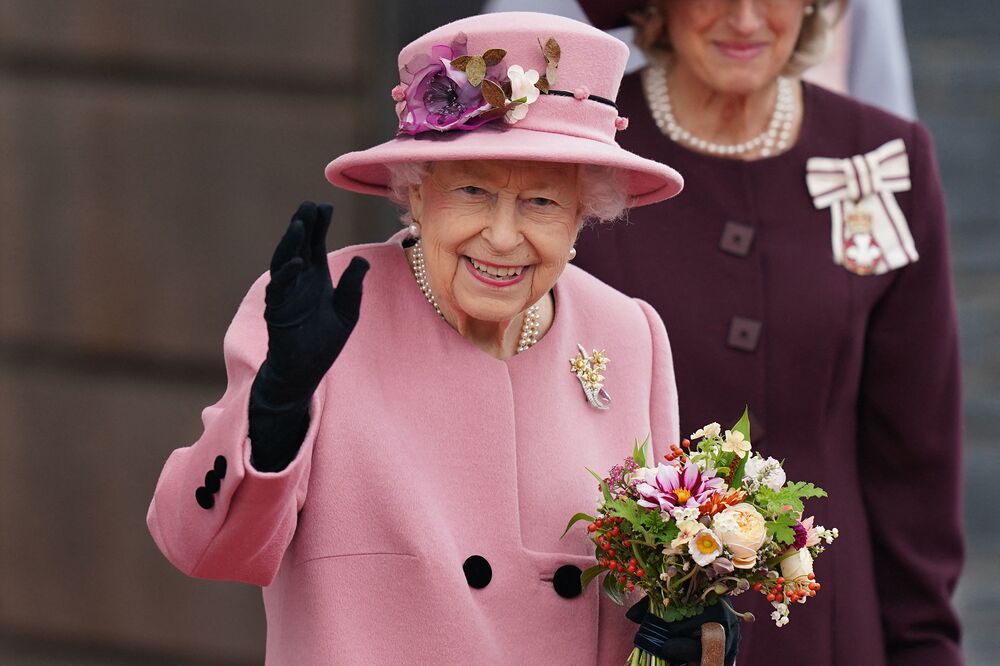
| QUEEN ELIZABETH |
Elizabeth II, in full Elizabeth Alexandra Mary, authoritatively Elizabeth II, by the Grace of God, of the United Kingdom of Great Britain and Northern Ireland and of her different domains and regions Queen, Head of the Commonwealth, Defender of the Faith, (conceived April 21, 1926, London, England), sovereign of the United Kingdom of Great Britain and Northern Ireland from February 6, 1952. In 2015 she outperformed Victoria to turn into the longest-prevailing ruler in British history.
Early life
Elizabeth was the senior little girl of Prince Albert, duke of York, and his significant other, Lady Elizabeth Bowes-Lyon. As the offspring of a more youthful child of King George V, the youthful Elizabeth had little possibility of consenting to the high position until her uncle, Edward VIII (a while later duke of Windsor), abandoned in her dad's approval on December 11, 1936, at which time her dad became King George VI and she became successor hypothetical. The princess' schooling was administered by her mom, who shared her little girls with a tutor, Marion Crawford; the princess was likewise grounded in history by C.H.K. Marten, a short time later executive of Eton College, and had guidance from visiting educators in music and dialects. During World War II she and her sister, Princess Margaret Rose, perforce invested quite a bit of their energy securely away from the London barrage and isolated from their folks, living for the most part at Balmoral Castle in Scotland and at the Royal Lodge, Windsor, and Windsor Castle.
S
Right off the bat in 1947 Princess Elizabeth went with the ruler and sovereign to South Africa. After her return there was a declaration of her pledge to her far off cousin Lieutenant Philip Mountbatten of the Royal Navy, once Prince Philip of Greece and Denmark. The marriage occurred in Westminster Abbey on November 20, 1947. Just before the wedding her dad, the ruler, given upon the spouse the titles of duke of Edinburgh, duke of Merioneth, and Baron Greenwich. They took home at Clarence House in London. Their first youngster, Prince (Charles Philip Arthur George), was conceived November 14, 1948, at Buckingham Palace.
Regal family picture, August 22, 1951. (From left) Prince Charles, Queen Elizabeth, Princess Margaret, the duke of Edinburgh, King George VI, and Princess Elizabeth. Princess Anne is in the buggy.
In the late spring of 1951 the strength of King George VI went into a genuine decay, and Princess Elizabeth addressed him at the Trooping the Color and on different other state events. On October 7 she and her significant other set out on an exceptionally fruitful visit through Canada and Washington, D.C. After Christmas in England she and the duke set out in January 1952 for a visit through Australia and New Zealand, yet on the way, at Sagana, Kenya, news contacted them of the lord's passing on February 6, 1952. Elizabeth, presently sovereign, on the double flew back to England. The initial three months of her rule, the time of full grieving for her dad, were passed in near detachment. Yet, in the late spring, after she had moved from Clarence House to Buckingham Palace, she embraced the standard obligations of the sovereign and completed her first state opening of Parliament on November 4, 1952. Her crowning ordinance was held at Westminster Abbey on June 2, 1953.
Elizabeth II in her crowning ordinance robes, photo by Cecil Beaton, 1953.
Sir Gerald Wollaston perusing the authority announcement of Elizabeth being sovereign of England, February 8, 1952.
Starting in November 1953 the sovereign and the duke of Edinburgh made a six-month round-the-world visit through the Commonwealth, which incorporated the principal visit to Australia and New Zealand by a supreme British ruler. In 1957, after state visits to different European countries, she and the duke visited Canada and the United States. In 1961 she made the principal illustrious British visit through the Indian subcontinent in 50 years, and she was likewise the main ruling British ruler to visit South America (in 1968) and the Persian Gulf nations (in 1979). During her "Silver Jubilee" in 1977, she managed at a London feast went to by the heads of the 36 individuals from the Commonwealth, voyaged all over Britain and Northern Ireland, and visited abroad in the South Pacific and Australia, in Canada, and in the Caribbean.
On the increase of Queen Elizabeth, her child Prince Charles became likely successor; he was named sovereign of Wales on July 26, 1958, and was so contributed on July 1, 1969. The sovereign's different youngsters were Princess (Anne Elizabeth Alice Louise), conceived August 15, 1950, and made princess regal in 1987; Prince (Andrew Albert Christian Edward), conceived February 19, 1960, and made duke of York in 1986; and Prince (Edward Anthony Richard Louis), conceived March 10, 1964, and made duke of Wessex and Viscount Severn in 1999. This load of youngsters have the last name "of Windsor," however in 1960 Elizabeth chose to make the joined name Mountbatten-Windsor for different relatives not styled sovereign or princess and regal height. Elizabeth's first grandkid (Princess Anne's child) was brought into the world on November 15, 1977.
Elizabeth II with (from left) Princess Anne, Prince Philip, Prince Andrew, and Prince Charles.
The sovereign appeared to be progressively mindful of the advanced job of the government, permitting, for instance, the broadcasting of the imperial family's homegrown life in 1970 and overlooking the proper disintegration of her sister's marriage in 1978. During the 1990s, notwithstanding, the illustrious family confronted various difficulties. In 1992, a year that Elizabeth alluded to as the regal family's annus horribilis, Prince Charles and his significant other, Diana, princess of Wales, isolated, as did Prince Andrew and his better half, Sarah, duchess of York. Additionally, Anne separated, and a fire gutted the regal home of Windsor Castle. Also, as the nation battled with a downturn, hatred over the royals' way of life mounted, and in 1992 Elizabeth, albeit by and by excluded, consented to pay charges on her private pay. The partition and later separation (1996) of Charles and the enormously well known Diana further dissolved help for the illustrious family, which was seen by some as out of date and hardhearted. The analysis heightened following Diana's demise in 1997, particularly after Elizabeth at first would not permit the public banner to fly at half-staff over Buckingham Palace. In accordance with her prior endeavors at modernizing the government, the sovereign consequently tried to introduce a less-stodgy and less-conventional picture of the government. These endeavors were met with blended achievement.
Sovereign Elizabeth II hello youngsters at NASA's Goddard Space Flight Center during a visit to the United States, May 2007.
NASA/Bill Ingalls
In 2002 Elizabeth praised her 50th year on the lofty position. As a component of her "Brilliant Jubilee," occasions were held all through the Commonwealth, remembering a few days of celebrations for London. The festivals were fairly lessened by the passings of Elizabeth's mom and sister from the get-go in the year. Starting in the last piece of the principal decade of the 21st century, the public remaining of the imperial family bounced back, and surprisingly Charles' 2005 union with Camilla Parker Bowles discovered a lot of help among the British public. In April 2011 Elizabeth drove the family in commending the wedding of Prince William of Wales—the senior child of Charles and Diana—and Catherine Middleton. The next month she outperformed George III to turn into the second longest-reigning ruler in British history, behind Victoria. Likewise in May, Elizabeth made a memorable outing to Ireland, becoming both the principal British ruler to visit the Irish republic and the first to go to Ireland starting around 1911. In 2012 Elizabeth praised her "Precious stone Jubilee," checking 60 years on the lofty position. On September 9, 2015, she outperformed Victoria's record rule of 63 years and 216 days.
England's Queen Elizabeth II, joined by her better half, Prince Philip, waving to well-wishers as she rides to St. Paul's Cathedral for a help commending her Golden Jubilee in 2002.
Elizabeth II (right) and Catherine, duchess of Cambridge, visiting Leicester, England, toward the beginning of the sovereign's Diamond Jubilee visit through the United


No comments:
Post a Comment